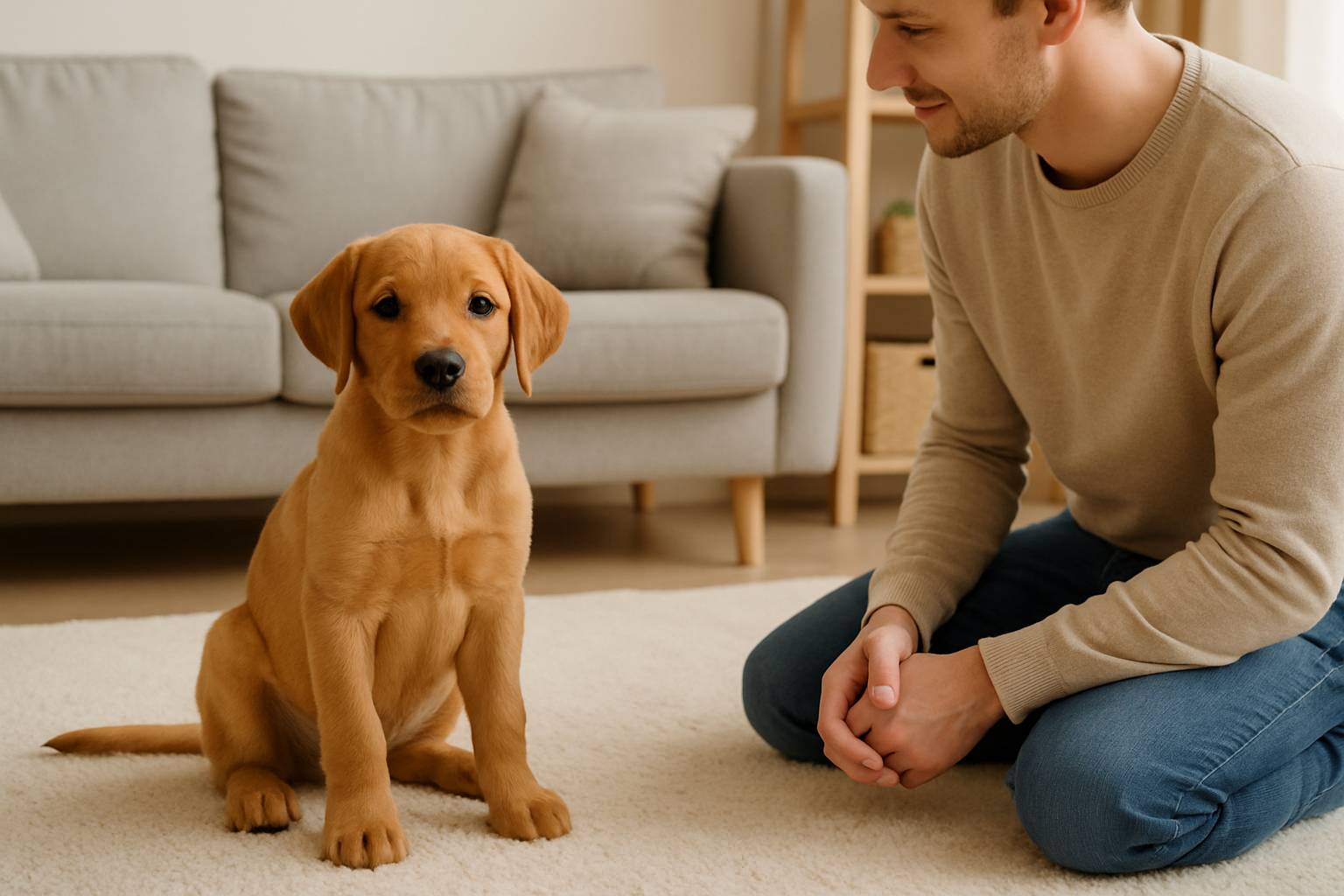
Complete Puppy Potty Training Guide: From Start to Success
Bringing home a new puppy is thrilling—until you discover your carpet has become an unexpected bathroom. Potty training is one of the most critical skills your puppy will learn, yet many new pet parents feel lost about where to start. The good news? With the right approach, consistency, and patience, most puppies can be reliably housetrained within a few months. This guide provides everything you need to successfully navigate this essential phase of puppy development.
Understanding Your Puppy's Biological Needs
Before you can effectively train your puppy, you need to understand what's happening biologically. Young puppies lack the physical and neurological development to hold their bladder and bowels for extended periods. This isn't misbehavior—it's biology. [2] Your puppy's body simply isn't ready to control these functions until they reach the appropriate developmental stage.
Puppies typically need to eliminate at very predictable times:
- Within 15-30 minutes after waking up from sleep or naps
- Within 15-30 minutes after eating a meal
- After drinking water
- After play sessions or physical activity
- Before bedtime
- During the night (younger puppies may need 1-2 breaks)
Here's a critical insight many new owners miss: don't wait for your puppy to signal that they need to go. Most young puppies won't communicate their needs clearly in the early weeks. [1] Instead, you must be proactive and take them out on schedule. This shifts the responsibility from your puppy to you, which is exactly where it should be initially.
The Right Age to Start Training
Timing matters when it comes to potty training success. The ideal window to begin formal housetraining is between 12-16 weeks of age. [2] At this point, puppies are developing better bladder control while still being young enough to form new habits easily.
However, don't panic if your puppy is younger or older than this window. You can start introducing the concepts at 8 weeks, though results will be slower. [5] Conversely, it's never too late to housetrain an older puppy or dog—it just requires more patience and consistency.
The timeline for complete housetraining varies significantly. Some puppies achieve reliability in 4-6 months, while others take up to a year. [2] Factors influencing this timeline include breed size, individual temperament, your consistency, and the specific training method you choose.
Creating a Structured Potty Schedule
Structure is the foundation of successful potty training. A consistent schedule removes guesswork and sets your puppy up for success. [1] Your schedule should coordinate feeding times, potty breaks, playtime, nap times, and your own daily routine.
Sample Daily Potty Schedule for a Young Puppy
- 7:00 AM: Wake up potty break
- 7:30 AM: Breakfast
- 8:00 AM: Post-meal potty break
- 8:30 AM: Playtime
- 9:30 AM: Post-play potty break + nap
- 12:00 PM: Wake up potty break
- 12:30 PM: Lunch
- 1:00 PM: Post-meal potty break
- 3:00 PM: Playtime and potty break
- 5:00 PM: Dinner
- 5:30 PM: Post-meal potty break
- 6:30 PM: Playtime and potty break
- 8:00 PM: Evening potty break
- 10:00 PM: Final bedtime potty break
Adjust this template based on your puppy's age and your lifestyle. The key is consistency—taking your puppy out at the same times each day helps regulate their digestive system and makes training predictable. [4]
Crate Training: Your Secret Weapon
Many new owners initially resist crate training, viewing it as confining or cruel. When done properly, crate training is actually one of the most effective housetraining tools available. [2] Dogs are naturally den animals and instinctively avoid soiling their sleeping spaces.
Choosing the Right Crate Size
Size matters significantly. Your crate should be large enough for your puppy to stand up, turn around, and lie down comfortably—but not so large that they can potty in one corner and sleep comfortably in another. [1] If your crate is too big, your puppy can eliminate in one end and avoid their mess by sleeping in the other, defeating the purpose of the training tool.
As a general rule, use the "month plus one" concept: a 4-month-old puppy can typically hold their bladder for approximately 5 hours. [2] This means limiting crate time accordingly and ensuring regular potty breaks.
Crate Training Best Practices
- Make the crate comfortable with soft bedding to encourage your puppy to view it as a safe space
- Never use the crate as punishment
- Keep the crate in your bedroom at night so you can hear if your puppy signals distress
- Establish a positive association by offering treats and praise when your puppy enters willingly
- If accidents occur in the crate, the crate is likely too large—resize it
Selecting Your Training Method
You have flexibility in how you approach potty training. The method you choose depends on your living situation, lifestyle, and long-term goals. What matters most is consistency within whichever method you select. [2]
Outdoor Training
This is the most common goal for puppy owners. Outdoor training teaches your puppy to eliminate in your yard or designated outdoor space. [4]
Implementation steps:
- Select a specific outdoor spot—consistency helps your puppy recognize this as the designated bathroom area
- Always use the same door to exit your home
- Use a short leash (4-6 feet) to guide your puppy directly to the spot
- Use a consistent command word like "go potty" each time [1]
- Stay outside with your puppy until they've completely finished eliminating
- Praise enthusiastically immediately after completion, not before
- Gradually increase freedom as reliability improves
Indoor Pad Training
If outdoor access is limited due to apartment living, mobility issues, or weather, indoor pads provide an alternative. [2] Pads aren't a substitute for eventual outdoor training but serve as an intermediate step or permanent solution for some households.
Implementation steps:
- Place pads in a designated area away from sleeping and eating zones
- Use the same spot consistently—multiple pads dilute the training message
- Guide your puppy to the pad on leash during scheduled potty times
- Use the same command word consistently
- Praise and reward immediately after successful elimination
- When transitioning outdoors, gradually move pads closer to the door, then outside
Positive Reinforcement: The Engine of Success
Reward-based training is scientifically proven to be more effective than punishment-based approaches. [1] When your puppy successfully eliminates in the correct spot, they should immediately understand this is the behavior you want repeated.
Effective Reward Strategies
- Timing is critical: Reward within seconds of completion, not before your puppy finishes
- Vary your rewards: Use high-value treats, enthusiastic verbal praise, playtime, or toy access
- Be specific: Say "yes!" or "good potty!" so your puppy understands what behavior earned the reward
- Gradually reduce treats: As reliability improves, shift to primarily verbal praise
- Maintain enthusiasm: Your excitement reinforces that this is a good thing
Managing Accidents: They're Part of the Process
Accidents are completely normal and expected during housetraining. [1] The key is responding appropriately when they happen.
When You Catch an Accident In Progress
- Don't yell or show anger—this teaches your puppy to hide when eliminating
- Make a neutral noise to get their attention (a simple "uh-uh")
- Calmly guide them to the appropriate potty spot
- Praise if they finish in the correct location
When You Discover an Accident After the Fact
- Do not punish, scold, or rub their nose in the mess—this is ineffective and harmful [4]
- Calmly clean the area immediately
- Use an enzymatic cleaner specifically designed for pet urine [1]
- Avoid ammonia-based cleaners, which can intensify urine odor and encourage re-soiling
- Resolve to improve your supervision and schedule adherence
Accidents typically indicate one of these issues: too much unsupervised freedom, insufficient potty breaks, inconsistent scheduling, or a medical problem. [1] Address the root cause rather than blaming your puppy.
Supervision and Confinement: The Three-Mode System
Successfully housetrained puppies operate in one of three modes: actively being supervised, confined in a crate, or sleeping. [4] Avoid the trap of giving your puppy unlimited freedom before they're ready.
Active Supervision Mode
When your puppy is out of the crate, you should be actively watching them. This means:
- Eyes on your puppy at all times
- Watching for pre-elimination signals (sniffing, circling, restlessness)
- Redirecting immediately if you notice these signs
- Limiting access to multiple rooms
- Using baby gates to confine your puppy to your immediate area
Crate Confinement Mode
Use the crate when you cannot actively supervise. Puppies naturally won't soil their sleeping space, making this mode effective for preventing accidents when you're busy or away.
Sleep Mode
Puppies sleep frequently and deeply. During sleep, their bodies aren't signaling elimination needs. This is why keeping your crate in your bedroom at night helps—you can respond quickly if your puppy wakes and needs a potty break. [2]
Reading Your Puppy's Signals
As your puppy matures, they'll develop recognizable signals indicating a need to eliminate. Learning to read these cues becomes increasingly important as you grant more freedom.
Common Pre-Elimination Behaviors
- Sniffing the ground intensely
- Circling or spinning
- Sudden pause in activity
- Restlessness or pacing
- Whining or barking
- Moving toward the door or designated potty area
- Scratching at the door
When you notice these behaviors, calmly and quickly guide your puppy to the appropriate potty location. [4] With time and consistency, you can even teach your puppy to ring a bell attached to the door to signal their needs.
Transitioning to Freedom
The ultimate goal is a puppy who can be trusted unsupervised throughout your home. This transition happens gradually and only after your puppy has demonstrated consistent reliability.
The 8-12 Week Reliability Rule
Once your puppy has gone 8-12 weeks without accidents, they're probably ready for increased freedom. [4] This seems like a long time, but remember that puppies are babies requiring constant supervision for safety, manners, and housetraining.
Gradual Freedom Progression
- Weeks 1-4: Constant supervision or crate confinement
- Weeks 5-8: Supervised access to 1-2 rooms
- Weeks 9-12: Supervised access to more rooms, brief unsupervised periods
- Week 12+: If no accidents, gradually increase unsupervised time
Even as you grant more freedom, maintain the regular potty schedule for several more months. Consistency during this transition phase prevents regression.
Troubleshooting Common Challenges
Your Puppy Won't Go During Scheduled Potty Times
If your puppy doesn't eliminate at their designated potty time, return them to their crate for 10-15 minutes, then try again. [1] If this pattern continues, it may indicate you need to space potty breaks further apart—your puppy simply doesn't need to go that frequently yet.
Frequent Accidents Despite Following the Schedule
Consult your veterinarian to rule out medical issues like urinary tract infections, parasites, or digestive problems. [4] Once health issues are eliminated, reassess your supervision, crate size, and schedule adherence.
Regression After Initial Success
If a previously housetrained puppy begins having accidents, this often signals a change in circumstances: new living situation, schedule disruption, medical issue, or behavioral anxiety. Address the underlying cause rather than re-punishing the behavior. [4]
Excitement or Fear-Based Elimination
Some puppies urinate when excited during greetings or when anxious. This isn't a housetraining failure but a separate behavioral issue. [4] Work with a professional trainer or behaviorist to address the underlying emotion.
Key Takeaways for Success
Successful puppy potty training rests on several fundamental principles:
- Consistency is non-negotiable: The same schedule, location, and responses every single day create the patterns your puppy needs
- You set the schedule: Don't wait for your puppy to signal needs—be proactive with timed potty breaks
- Supervision and confinement work together: Your puppy should never have unsupervised access to areas where accidents are possible
- Positive reinforcement builds habits: Reward immediately when your puppy succeeds in the right spot
- Accidents are learning opportunities: Respond calmly and focus on improving your management
- Patience pays off: Most puppies achieve reliability within a few months when handled with consistency and kindness
- Professional help is available: If you're struggling, trainers and veterinarians can provide personalized guidance
Potty training is one of the most important skills you'll teach your puppy, and it sets the foundation for a lifetime of good habits. By understanding your puppy's biological needs, maintaining consistent routines, using appropriate tools like crates, and responding positively to successes, you'll navigate this phase successfully. Remember that you're both learning—celebrate the progress, stay patient through the setbacks, and before long, you'll have a reliably housetrained companion who has earned the freedom to be trusted throughout your home.
Sources & References
- https://www.thepuppyacademy.com/blog/2023/6/18/how-can-i-potty-train-my-new-puppy
- https://www.pethonesty.com/blogs/blog/puppy-potty-training-101
- https://vcahospitals.com/know-your-pet/house-training-your-puppy
- https://petwastegenie.com/blogs/tips-tricks/the-ultimate-guide-to-puppy-potty-training-from-pee-pee-pads-to-backyard-bliss