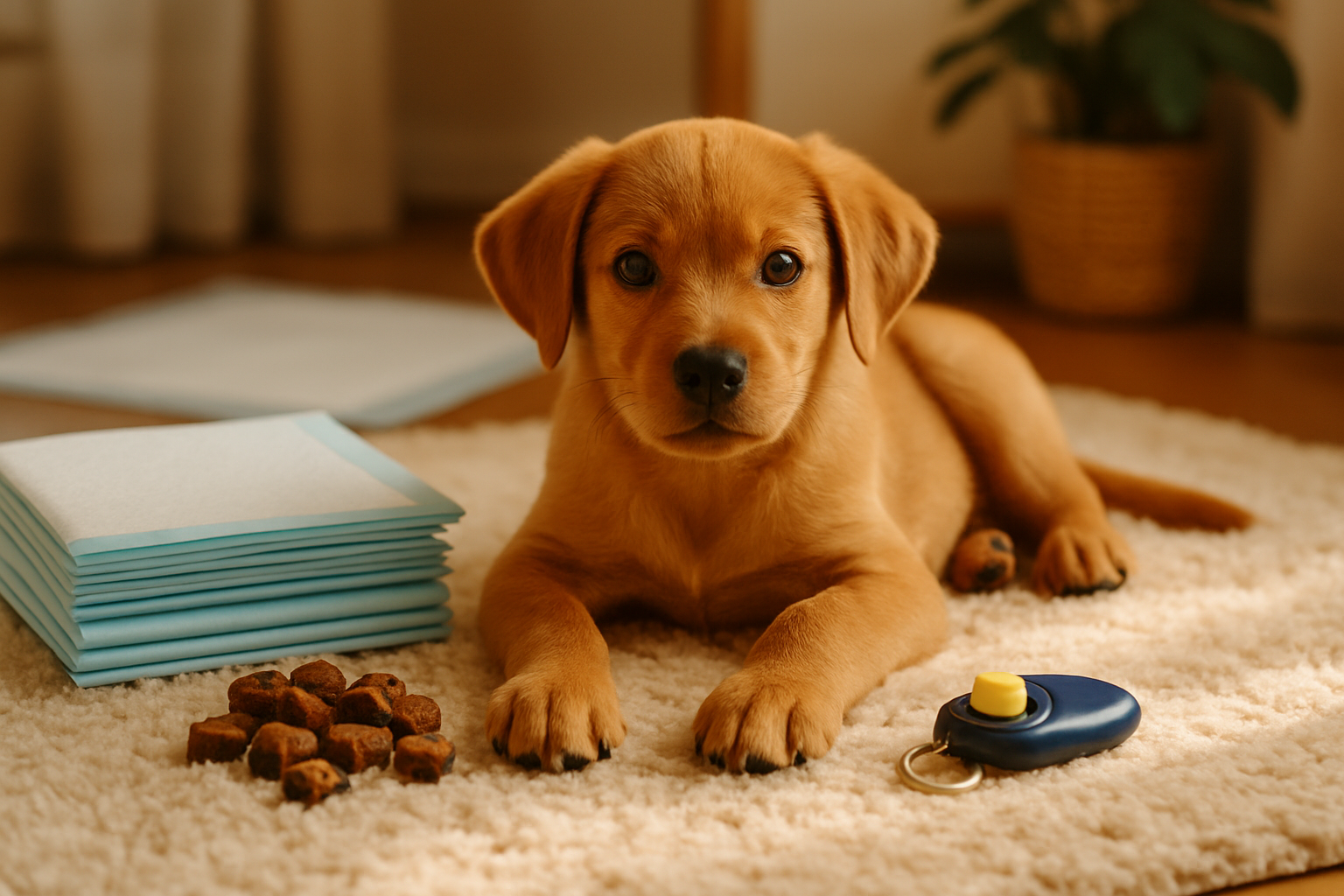
Complete Puppy Potty Training Guide: From Day One to Full Independence
Bringing home a new puppy is exciting—until you step in that first accident on your living room carpet. Potty training is one of the most critical skills your puppy will learn, and getting it right sets the foundation for a lifetime of good habits. The good news? With consistency, patience, and the right approach, you can dramatically reduce accidents and build a reliably housebroken dog.
This guide breaks down everything you need to know about puppy potty training, from understanding your puppy's biological needs to troubleshooting common challenges.
When to Start Potty Training Your Puppy
The timing of potty training matters. Most puppies are developmentally ready to begin housebreaking between 12-16 weeks of age [2]. Before this window, their bladder and bowel control systems simply aren't mature enough to hold it consistently, no matter how hard you try.
If you've adopted an older puppy or rescue dog, don't worry—it's never too late to teach these skills, though it may require additional time and patience [2].
The Reality Check: Even with perfect timing and execution, complete housebreaking typically takes 4-6 months, with some puppies needing up to a year [2]. This timeline varies based on breed, individual temperament, consistency, and your training method. Toy breeds and small dogs often take longer than larger breeds, while some breeds like Poodles and Doodles tend to catch on quickly [5].
Understanding Your Puppy's Potty Patterns
Before you can train your puppy, you need to understand when they'll need to go. Puppies don't have voluntary bladder control yet, so they follow predictable patterns. Expect your puppy to need a bathroom break:
- Immediately after waking up from sleep or naps
- Within 15-30 minutes after eating
- Shortly after drinking water
- After playtime or exercise
- Before bedtime
The critical mistake most new puppy parents make? Waiting for their puppy to "signal" that they need to go. Most young puppies won't reliably tell you—they'll just have an accident [1]. Your job is to be proactive, not reactive. Don't wait for signs like circling or sniffing; take your puppy out on schedule before they have an opportunity to fail.
Building Your Puppy's Potty Schedule
A structured schedule is the backbone of successful potty training. It removes guesswork and gives your puppy the predictability they need to develop bladder control [1].
The "Month Plus One" Rule: A general guideline is that a puppy can hold their bladder for approximately one hour per month of age, plus one hour [2]. So a 3-month-old puppy can typically hold it for about 4 hours, while a 4-month-old can manage 5 hours.
Sample Daily Schedule for a 3-Month-Old Puppy:
- 7:00 AM - Wake up, immediate potty break
- 7:30 AM - Breakfast and water
- 8:00 AM - Potty break
- 8:30 AM - Playtime
- 9:00 AM - Potty break, then nap in crate
- 12:00 PM - Wake up, potty break
- 12:30 PM - Lunch and water
- 1:00 PM - Potty break
- 1:30 PM - Supervised playtime
- 2:00 PM - Potty break, then nap
- 5:00 PM - Wake up, potty break
- 5:30 PM - Dinner and water
- 6:00 PM - Potty break
- 6:30 PM - Playtime and training
- 7:30 PM - Potty break
- 8:00 PM - Settle down time
- 10:00 PM - Final potty break before bed
Adjust this schedule based on your puppy's age and your household routine. The key is consistency—your puppy's body will adapt to the rhythm you establish [1].
Crate Training: Your Secret Weapon
Many people initially resist crate training, viewing it as cruel confinement. In reality, when done correctly, crate training is one of the most humane and effective potty training tools available [2].
Dogs are naturally den animals and instinctively avoid soiling their sleeping space. A properly-sized crate leverages this instinct to help your puppy develop bladder control [2].
Choosing the Right Crate Size: Your puppy's crate should be large enough for them to stand up, turn around, and lie down comfortably, but not so large they can potty in one corner and sleep in another [1]. If your puppy is having repeated accidents in the crate, it's likely too big. Consider a divider panel that grows with your puppy, or upgrade to a larger crate as they develop better control.
Crate Training Best Practices:
- Make the crate a positive space with comfortable bedding and toys
- Never use the crate as punishment
- Keep your puppy's crate in your bedroom at night so you can hear distress signals
- Never leave your puppy in a crate longer than they can physically hold it
- Always take your puppy directly outside immediately after crate time
Designating Your Puppy's Potty Spot
Consistency in location is crucial. Whether you're training outdoors or using potty pads indoors, always use the same designated spot [1].
For Outdoor Training:
- Choose a specific area that's easily accessible and not too far from your home
- Always use the same door when taking your puppy outside
- Lead your puppy on a short 4-6 foot leash directly to the spot [1]
- Stay outside with them until they've completely finished
- Use a consistent command like "go potty" while they're eliminating [5]
For Indoor Pad Training: Place potty pads in a designated area—a bathroom corner or balcony works well [5]. Position your puppy on the pad after meals and water breaks. After one to two weeks, most puppies naturally gravitate toward that spot when they need to go [5].
Important Note: If you start with potty pads, plan to transition to outdoor training once your puppy is fully vaccinated. Pads should be a stepping stone, not a permanent solution, as they can confuse puppies about where it's acceptable to eliminate [2].
Positive Reinforcement: The Game Changer
What you do immediately after your puppy eliminates in the correct spot matters enormously. This is when learning happens.
The Timing is Critical: Wait until your puppy has completely finished before offering praise [1]. Interrupting them mid-stream can create confusion about what behavior you're rewarding.
Reward Options:
- Treats: High-value rewards work best—small pieces of chicken, cheese, or special training treats
- Verbal Praise: Enthusiastic, genuine praise like "Yes! Good potty!" in an excited voice
- Play: A few minutes of play or a favorite toy
- Combination: Many trainers find that combining treats with verbal praise and play creates the strongest association
The goal is to make going potty in the designated spot the best thing that's ever happened to your puppy. This positive association becomes self-reinforcing—they'll want to repeat the behavior [1].
Nighttime Training: A Separate Challenge
Nighttime housebreaking often takes longer than daytime training because it requires physiological maturity your puppy may not have yet. Most puppies can't reliably hold it through the night until around 4-6 months old.
Nighttime Strategy:
- Limit water intake 2-3 hours before bedtime
- Take your puppy out for a final potty break right before sleep
- Keep the crate in your bedroom so you can respond quickly to whining
- Be prepared for middle-of-the-night bathroom breaks, especially with young puppies
- Take your puppy outside immediately upon waking in the morning
- Celebrate successful dry nights with praise and rewards [5]
Expect occasional nighttime accidents—this is completely normal and not a sign of failure [5].
Handling Accidents: The Right Way
Accidents will happen. How you respond determines whether your puppy learns from the experience or becomes anxious about eliminating in front of you.
If You Catch Them in the Act: Calmly interrupt with a clap or noise, immediately take them to their designated potty spot, and praise if they finish there [2]. This teaches them the location is important, not that elimination itself is wrong.
If You Discover an Accident After the Fact: Don't punish, scold, or rub their nose in it. Punishment teaches puppies to hide when they need to go, not to communicate their needs [2]. Instead:
- Clean it up thoroughly with an enzymatic cleaner (not ammonia-based, which can intensify urine smell) [1]
- Neutralizing the scent prevents your puppy from returning to that spot to eliminate again
- Reflect on what went wrong—too much unsupervised freedom? Skipped potty break? Schedule adjustment needed?
The Real Truth About Accidents: They're typically not your puppy's fault. They're a sign that the human in the equation needs to be more vigilant about supervision, scheduling, or water management [1].
Building Consistency and Muscle Memory
Potty training works through repetition. The more consistently you execute the same routine—same times, same door, same spot, same commands—the faster your puppy develops instinctive responses [1].
Think of it like muscle memory. A pianist doesn't think about finger placement anymore; it's automatic. Similarly, your puppy will eventually head to their designated spot automatically without your guidance, but only if they've practiced the same pattern hundreds of times.
The first few weeks require high vigilance and strict adherence to your schedule. This upfront investment pays dividends in faster training and fewer accidents [1].
Special Considerations and Troubleshooting
If Your Puppy Isn't Making Progress: Before assuming a training problem, consult your veterinarian to rule out medical issues like urinary tract infections, parasites, or digestive problems [2]. Sometimes what looks like a training failure is actually a health issue.
For Puppies Not Going at Scheduled Times: If your puppy consistently doesn't eliminate during their scheduled potty break, return them to their crate for 10-15 minutes, then try again [1]. This prevents them from having an accident immediately after leaving the designated area. If this pattern continues, you may need to increase the time between breaks.
Managing Multiple Puppies: Train each puppy individually at first. Taking them out separately ensures each one eliminates and receives individual attention and praise. Once they're reliably trained, you can transition to group outings.
The Timeline: What to Expect
Understanding realistic expectations prevents frustration. Here's a general progression:
- Weeks 1-2: Frequent accidents are normal. Focus on establishing the routine and location.
- Weeks 3-4: Your puppy begins recognizing the pattern and may have fewer accidents.
- Months 2-3: Daytime accidents should become rare if you're following the schedule consistently.
- Months 3-4: Your puppy may start signaling when they need to go.
- Months 4-6: Most puppies are reliably housebroken during the day; nighttime may still be inconsistent.
- 6+ Months: Full reliability, including nighttime, for most puppies.
Remember: some puppies move faster through this timeline, while others need the full duration. Both are completely normal [2].
Earning Freedom Through Consistency
The ultimate goal isn't just a potty-trained puppy—it's earning the trust to give your dog the freedom to roam your home without worry. This freedom comes from establishing excellent habits early [1].
As your puppy demonstrates reliability, gradually expand their unsupervised access to your home. Start with one room, then add another, then another. If accidents occur, you've expanded freedom too quickly—return to closer supervision.
The structure you provide now becomes the foundation for a well-behaved, trustworthy adult dog. It's worth the effort.
Key Takeaways for Success
- Start between 12-16 weeks of age when puppies are developmentally ready
- Establish a consistent schedule based on your puppy's age and needs
- Use a properly-sized crate to leverage your puppy's natural denning instinct
- Designate a specific potty spot and always use the same location
- Reward immediately after completion with treats, praise, or play
- Clean accidents thoroughly with enzymatic cleaner, never punish
- Be proactive—don't wait for your puppy to signal; follow the schedule
- Expect 4-6 months for full housebreaking; some puppies need longer
- Consistency from you creates consistency in your puppy
- Consult your vet if progress stalls to rule out health issues
Potty training requires patience, but it's absolutely achievable with the right approach. You're not just teaching your puppy where to eliminate—you're building a foundation of trust, communication, and good habits that will benefit you both for years to come.