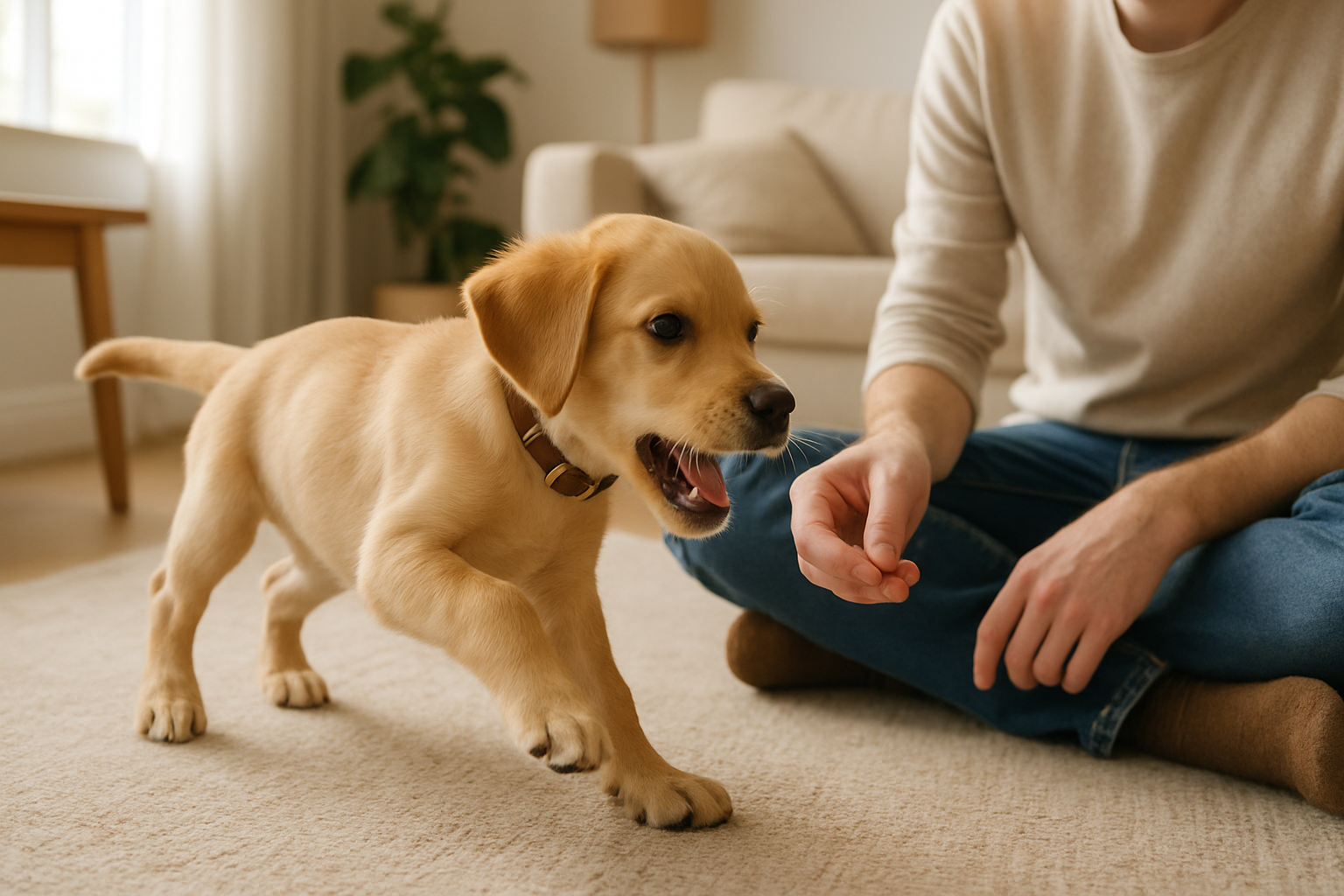
Why Indoor Games Matter for Your Puppy's Development
Puppies are bundles of energy with curious minds constantly seeking stimulation. When weather keeps you indoors or outdoor time is limited, many new pet parents struggle with keeping their young dogs entertained and well-behaved. The truth is, indoor games aren't just about burning energy—they're critical for your puppy's cognitive development, building confidence, and establishing a strong foundation for obedience training. [5]
Quality indoor play sessions provide both physical exercise and mental enrichment, helping your puppy develop problem-solving skills, improve focus, and strengthen the bond between you and your furry companion. These games also help tire out your puppy's mind, which is just as important as physical exercise for preventing destructive behaviors and anxiety. [4]
Game 1: The Name Game – Build Foundation Recall
Before teaching complex commands, your puppy needs to recognize and respond to their own name with enthusiasm. The Name Game is the cornerstone of all recall training and serves as the foundation for your puppy's ability to come when called. [4]
How to Play:
- Start in a distraction-free room with high-value treats (small, tasty pieces your puppy loves)
- Say your puppy's name in an excited, happy tone
- The moment your puppy looks at you, immediately reward them with a treat and praise
- Repeat this 5-10 times per session, keeping it short and fun
- Gradually increase distance as your puppy becomes reliable
- Add unpredictability by tossing treats in different directions—over your shoulder, down the hallway, or between your legs
Pro Tip: Don't wait for your puppy to look at you before rewarding; instead, get the treat to them quickly to create a reflex where they automatically turn toward you at the sound of their name. [4]
Game 2: Hide and Seek – Engage Natural Hunting Instincts
This timeless game taps into your puppy's natural searching abilities while building confidence and problem-solving skills. Hide and Seek strengthens the recall command and teaches your puppy that coming to you is always rewarding. [2] [3]
How to Play:
- Start with your puppy in one room while you hide in an obvious nearby location (like behind a door that's slightly open)
- Call your puppy's name and use an excited voice to encourage them to find you
- When they locate you, shower them with praise and treat rewards
- As your puppy improves, hide in more challenging spots and increase the distance
- You can also hide treats throughout a room and encourage your puppy to find them
Make It Harder: Once your puppy masters basic hide and seek, have two people hide in different rooms and call your puppy back and forth, rewarding each successful find. [2]
Game 3: Chase Games – Build Joyful Recall
Chase taps into your puppy's natural prey drive and creates excitement around coming to you. This game is particularly effective for building a strong, enthusiastic recall where your puppy runs toward you with genuine joy. [2]
How to Play:
- Start in a safe, clear indoor space (living room or hallway)
- Get your puppy's attention and run away from them in an exaggerated, playful manner
- Use excited language: "Chase me!" or "Let's go!"
- When your puppy catches up, reward them enthusiastically with treats and praise
- Reverse roles by having your puppy run away while you follow and reward
Safety First: Ensure your playing area is clear of obstacles, furniture, and other hazards before beginning. [2]
Game 4: The Stairs Sprint – Build Endurance
If you have stairs in your home, this simple game provides excellent cardiovascular exercise and helps burn pent-up energy quickly. It's perfect for rainy days when outdoor running isn't an option. [3]
How to Play:
- Start at the bottom of your stairs with your puppy
- Run up the stairs together, encouraging your puppy to follow
- Return to the bottom and repeat 3-5 times
- Rest between sets and monitor for signs of fatigue
- For puppies without stairs access, running up and down a long hallway works just as well
Important Note: Be mindful of your puppy's age and breed. Very young puppies (under 4 months) should avoid excessive stair climbing as their joints are still developing. Always supervise and stop if your puppy shows signs of exhaustion. [3]
Game 5: Indoor Agility Course – Challenge Body and Mind
Transform your living room into an obstacle course that challenges your puppy physically while building confidence and obedience. This game teaches your puppy to follow directional cues and navigate challenges. [3]
How to Set Up:
- Jumping Obstacles: Use couch cushions or place a broomstick across two laundry baskets
- Weaving Poles: Space out paper towel rolls or cones in a straight line
- Tunnels: Use a collapsible kids' play tunnel or drape blankets over chairs
- Balance Beam: A low step stool or cushion works for gentle balance work
How to Play:
- Use verbal commands or hand gestures to guide your puppy through the course
- Start with one obstacle at a time and reward successful completion
- Gradually combine obstacles into a full course
- Celebrate each achievement with enthusiastic praise
Customization Tip: Adjust obstacle height and difficulty based on your puppy's size and age. The goal is fun and confidence-building, not competition. [3]
Game 6: Tug of War – Build Confidence and Bond
Contrary to popular myth, tug of war doesn't make puppies aggressive when played correctly. This game actually builds confidence, strengthens your bond, improves impulse control, and provides excellent physical exercise. [3] [4]
How to Play:
- Use a dedicated tug toy (rope toy or soft tug toy appropriate for your puppy's size)
- Encourage your puppy to grab one end while you hold the other
- Engage in gentle tugging, shaking the toy side to side (never up and down, which can strain the spine)
- Let your puppy "win" occasionally by releasing the toy
- Teach a "drop it" command by offering a treat in exchange for releasing the toy
Safety Guidelines: Always supervise tug play, use appropriate-sized toys, and shake horizontally rather than vertically to protect your puppy's developing spine. [3] [4]
Game 7: Treat Hunt – Activate Scent Work Instincts
Puppies have incredible noses, and scent work games engage their natural hunting and foraging instincts while providing mental stimulation that tires them out as effectively as physical exercise. [3] [4]
How to Play:
- Have your puppy wait in a separate room or their crate
- Hide treats or kibble throughout your home—under cushions, in cardboard boxes, behind furniture, in paper bags
- Release your puppy with an excited "Find it!" command
- Let them sniff out the hidden rewards
- Praise enthusiastically when they discover each treat
Progression Ideas:
- Start with obvious hiding spots and gradually increase difficulty
- Use different textures and containers to make searching more interesting
- Hide toys instead of treats for variety
- Create a "sniff box" by placing treats in a box filled with crumpled paper
This game is particularly valuable for high-energy puppies, as mental stimulation from scent work can be more tiring than physical exercise alone. [4]
Game 8: Obedience Training Games – Make Learning Fun
Transform basic obedience into engaging games that keep your puppy's mind sharp while reinforcing essential commands. Training sessions are more effective when they feel like playtime rather than work. [4]
Game Ideas:
- Simon Says: Call out commands in sequence—"sit, down, sit, shake"—rewarding correct responses
- Command Roulette: Randomly select commands and reward immediate compliance
- The Waiting Game: Practice "stay" by gradually increasing duration while your puppy remains in position
Key Training Principle: Keep sessions short (5-10 minutes), use high-value rewards, and always end on a positive note. [4]
Game 9: Puzzle Toys and Interactive Feeders – Slow Down Eating
Puzzle toys and interactive feeders engage your puppy's problem-solving abilities while slowing down eating speed, improving digestion, and reducing anxiety. These tools are particularly beneficial for puppies who gulp their food. [3] [4]
How to Use:
- Fill puzzle toys with kibble or treats
- Let your puppy figure out how to extract the rewards
- Use interactive feeders during regular meal times
- Rotate different puzzle toys to maintain novelty and interest
Benefits: Puzzle toys provide mental enrichment, decrease stress and anxiety, and can help prevent behavioral issues related to boredom. [4]
Game 10: The Toy Cleanup Game – Teach Responsibility
This clever game teaches your puppy to put away their own toys while reinforcing the "drop it" command and providing mental stimulation. It's a practical trick that also helps keep your home tidy. [3]
How to Teach:
- Place a dedicated toy basket in an easily accessible location
- Give your puppy a toy and position them near the basket
- Lure their head over the basket and say "drop it"
- Reward immediately when they release the toy into the basket
- Gradually move the basket farther away as your puppy improves
- Add a verbal cue like "clean up your toys"
Progression: This game works best after your puppy has already mastered basic "drop it" and "get it" commands. [3]
Bonus Game: Tennis Ball Rally – Multi-Person Recall Practice
This advanced game involves two people and strengthens your puppy's recall with multiple handlers while keeping them engaged and active. [2]
How to Play:
- You and a friend stand in different areas of a room
- One person calls your puppy's name and rewards them with a treat
- The other person then calls your puppy, who runs to them for another reward
- Make the recalls unpredictable so your puppy doesn't anticipate who's calling next
- Vary the time between calls and the distance between handlers
Advanced Variation: Substitute toys as rewards instead of treats to teach your puppy that recall is rewarding regardless of the reward type. [2]
General Tips for Successful Indoor Play Sessions
- Keep It Short: Puppies have limited attention spans. Aim for 5-15 minute sessions depending on age
- Use High-Value Rewards: Reserve special treats for training games to maintain motivation
- Maintain Consistency: Play games at regular times to establish routine and anticipation
- Rotate Games: Smart puppies can become bored with repetition. Vary your games to maintain engagement
- Read Your Puppy: Stop playing if your puppy shows signs of fatigue, stress, or disinterest
- Practice Indoors First: Master games in low-distraction environments before moving outside
- Celebrate Success: Use enthusiastic praise and treats to reinforce positive behavior
The Bigger Picture: Building a Well-Adjusted Puppy
Indoor games are more than just entertainment—they're essential tools for raising a confident, well-behaved, and mentally healthy puppy. These activities provide the dual benefits of physical exercise and cognitive stimulation that developing puppies need for optimal growth. [5]
By incorporating these games into your daily routine, you're not just keeping your puppy entertained on rainy days. You're building a strong foundation for obedience, strengthening your relationship, and giving your puppy the enrichment necessary for emotional and behavioral development. [5]
The key to success is keeping games fun and pressure-free. Your puppy should look forward to playtime with you, knowing it means joy, rewards, and quality time together. Start with games that match your puppy's current skill level, and gradually introduce more challenging activities as they develop confidence and understanding.
Final Thoughts
Rainy days, busy schedules, and limited outdoor space don't have to mean a frustrated, bored puppy. With these 10 indoor games, you have everything you need to keep your puppy mentally stimulated, physically active, and deeply bonded to you. Pick two or three games to start with, master them, then gradually add others to keep your puppy engaged and excited about playtime. Your future well-trained, happy adult dog will thank you for the investment you make today.
Sources & References
- https://zigzag.dog/en-us/blog/new-puppy/games-and-toys/puppy-training-games-library/
- https://www.pedigree.com/dog-care-articles/8-fun-indoor-activities-dogs
- https://www.olk9md.com/engaging-activities-for-puppies/
- https://www.dogwise.com/enrichment-games-for-high-energy-dogs-your-step-by-step-guide-to-dog-training-fun/