Why Indoor Puppy Games Matter More Than You Think
When people think about puppy play, they often picture outdoor adventures and sprawling backyards. But here's what many new dog owners discover: some of the most valuable learning happens indoors, in controlled environments where your puppy can focus without distractions. [4] Indoor games serve a dual purpose—they provide essential mental stimulation and physical exercise while simultaneously reinforcing training and building confidence in your growing pup.
Indoor play is particularly crucial for puppies living in apartments, during harsh weather, or when outdoor access is limited. Beyond convenience, indoor games create predictable training opportunities where you can work on foundational skills without the chaos of outdoor distractions. Your puppy's brain is developing rapidly during their first year, and strategic play sessions can significantly impact their behavior, obedience, and emotional development.
The Science Behind Play-Based Learning
Research shows that puppies learn best through play because it engages both their physical and cognitive systems simultaneously. [4] When your puppy plays, they're not just burning energy—they're solving problems, learning cause-and-effect relationships, and building neural pathways that support long-term learning. This makes games an investment in your puppy's future success, not just a way to pass time on a Tuesday afternoon.
Game 1: The Muffin Tin Puzzle
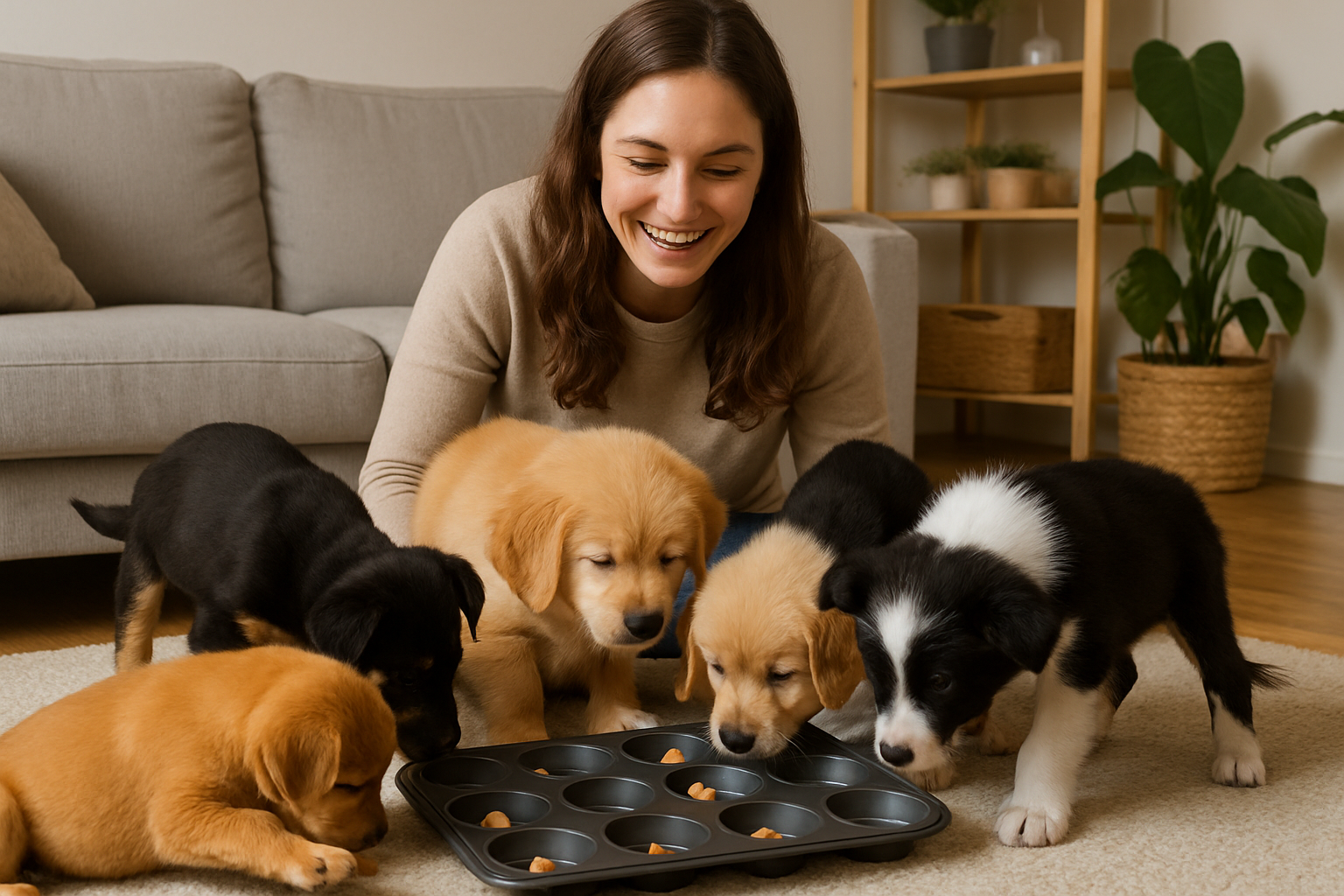
This deceptively simple game transforms a kitchen item into a powerful brain-training tool. [2] Place treats into the cups of a standard muffin tin, then cover each cup with a tennis ball. Your puppy must figure out how to move the balls and access the rewards underneath.
Why it works: This game engages your puppy's problem-solving abilities and natural foraging instincts. As your pup masters the basic version, increase the difficulty by placing treats in only some cups while covering all of them. This teaches your puppy to think strategically and use their nose to identify which cups contain rewards.
Pro tip: Start with just two or three cups to build confidence, then gradually increase complexity as your puppy succeeds.
Game 2: The Treat Burrito Unroll
This tactile game requires minimal setup and maximum engagement. Lay a towel flat, scatter small treats across its surface, then slowly roll it up with the treats tucked inside. [2] Present the "burrito" to your puppy and watch them work to unroll it and discover each hidden treat.
Why it works: The game combines physical activity (pawing and rolling) with problem-solving. It teaches your puppy patience and persistence while providing satisfying sensory feedback. This game is also excellent for puppies who tend to gulp their food too quickly.
Pro tip: Use a lightweight towel or blanket so your puppy doesn't feel overwhelmed. You can also freeze the burrito for longer-lasting entertainment on particularly energetic days.
Game 3: Hide and Seek
This classic game builds your puppy's recall skills while strengthening your bond. Have your puppy sit and stay in one room while you find a hiding spot elsewhere in your home. [5] Once hidden, call your puppy to come find you, then celebrate enthusiastically with treats and praise when they succeed.
Why it works: Hide and seek teaches your puppy to search, listen for your voice, and come when called—all critical survival skills. The game also helps your puppy learn that separation is temporary and that you always return, which reduces anxiety.
Pro tip: Start with easy hiding spots where your puppy can find you quickly. As they improve, gradually choose more challenging locations. Make sure your puppy knows the "stay" command before playing this game.
Game 4: Stair Sprints
If you have stairs in your home, you have an excellent indoor cardio tool. Have your puppy run up and down the stairs with you several times, rest, then repeat. [5] This simple activity burns significant energy while providing excellent cardiovascular exercise.
Why it works: Stairs provide intense physical activity in a contained space. They build muscle strength and coordination while mentally engaging your puppy through the repetition and command structure. This game is perfect for rainy days when outdoor exercise isn't possible.
Important safety note: Avoid stair games with very young puppies (under 4 months) whose bones are still developing. Always supervise closely and stop if your puppy shows signs of fatigue or limping. If you don't have stairs, running up and down a long hallway provides similar benefits.
Game 5: Treat Scavenger Hunt
Transform your home into a treasure hunt by hiding treats or kibble throughout a room or multiple rooms. [5] Release your puppy with an enthusiastic command like "Find it!" and let them use their nose to locate all the hidden rewards.
Why it works: This game activates your puppy's most powerful sense—their nose. Scent work is mentally exhausting in the best way possible, often tiring a puppy more than physical exercise alone. The game also builds confidence and independence.
Pro tip: Start by hiding treats in obvious locations where your puppy can easily succeed. Gradually increase difficulty by hiding treats under blankets, inside boxes, or in less obvious corners. This game is excellent for building your puppy's problem-solving skills and can be adapted as they grow.
Game 6: The Name Recognition Game
Teach your puppy their name through play by tossing treats in random directions while calling their name. [3] Each time your puppy hears their name and looks at you, reward them immediately with a treat toss. Vary your throwing pattern—over your shoulder, down the hallway, between your legs—to keep the game unpredictable and exciting.
Why it works: This game creates a strong positive association with your puppy's name and teaches them to respond with attention. It's one of the most foundational skills you can teach, and gamifying it makes learning fun and rewarding.
Pro tip: Practice this game indoors first where distractions are minimal. Once your puppy has mastered name recognition inside, you can gradually introduce it outdoors. The unpredictable treat tosses keep your puppy engaged and excited about the game.
Game 7: DIY Cardboard Tube Puzzle
Repurpose toilet paper and paper towel tubes into engaging puzzle toys. [2] Arrange several tubes upright in a shoebox so they support each other, then drop treats or kibble into the tubes. Your puppy must figure out how to extract each piece of food from the tubes.
Why it works: This game combines multiple enrichment elements—problem-solving, foraging, and physical manipulation. It's an inexpensive way to create a complex puzzle that keeps puppies occupied for extended periods. You can also fill individual tubes with peanut butter and freeze them for longer-lasting entertainment.
Pro tip: Supervise your puppy during this game to ensure they don't ingest cardboard. Remove any pieces that become too small or damaged.
Game 8: Container Search Challenge
Use empty containers of various sizes—shoeboxes, yogurt cups, plastic bins—to create a search game. [2] Place containers around a room with treats hidden inside only one or two of them. Your puppy must use their nose to identify which containers hold rewards.
Why it works: This game develops your puppy's scent discrimination skills—the ability to identify specific smells among many. It's an excellent foundation for more advanced scent work as your puppy matures. The game also builds independence and confidence in problem-solving.
Pro tip: Start by poking small holes in the containers to make the scent more obvious. As your puppy becomes skilled, reduce the holes and increase the number of containers to increase difficulty.
Game 9: Tug of War (Done Right)
Tug of war has received unfair criticism in recent years, but when played correctly, it's an excellent game for puppies. [4] Use a plush toy that your young puppy can grip comfortably, and always move the toy side to side rather than up and down to protect their developing spine. Allow your puppy to win regularly—winning is rewarding and builds confidence.
Why it works: Tug of war builds confidence, develops impulse control, and strengthens the bond between you and your puppy. Research shows that playing tug actually reduces aggression and doesn't create possessive behavior in healthy puppies. The game also provides excellent physical exercise and jaw strengthening.
Important note: Avoid tug of war only if your puppy shows signs of possessive aggression or resource guarding issues. For typical puppies, this game is safe and beneficial. [4]
Game 10: Indoor Agility Course
Transform your living room into an obstacle course using household items. [5] Create jumping obstacles with couch cushions or a broomstick balanced on laundry baskets. Make weaving obstacles by spacing paper towel rolls in a line. Build a tunnel using a collapsible play tunnel or chairs covered with blankets. Guide your puppy through the course using verbal commands and hand gestures, rewarding successful completion with praise and treats.
Why it works: Agility work develops coordination, builds muscle strength, and provides intense physical exercise. It also reinforces obedience commands in a fun, engaging context. The varied obstacles keep your puppy mentally stimulated while the physical challenge burns energy effectively.
Pro tip: Start with just one or two simple obstacles and gradually add complexity as your puppy gains confidence. Always keep the course at an appropriate height for your puppy's size to prevent injury. Make the experience positive by celebrating every attempt, not just successful completions.
Essential Tips for Successful Indoor Play Sessions
- Keep sessions short: Puppies have limited attention spans. Aim for 5-15 minute play sessions depending on your puppy's age and energy level.
- Use high-value rewards: Reserve special treats for training games to maintain your puppy's motivation and interest.
- Rotate games: Prevent boredom by rotating through different games throughout the week. Smart puppies need variety to stay engaged. [3]
- Play before training: A tired puppy is often a focused puppy. Play games to burn energy before formal training sessions.
- Supervise closely: Always watch your puppy during play to ensure they're safe and not ingesting inappropriate materials.
- Celebrate effort: Reward your puppy for trying, not just succeeding. This builds confidence and maintains enthusiasm.
- End on a positive note: Finish each play session while your puppy is still engaged and having fun, not when they're exhausted or losing interest.
Tailoring Games to Your Puppy's Age and Temperament
Very young puppies (8-12 weeks) benefit from gentler games like treat burritos and container searches that don't require advanced obedience skills. [4] As your puppy matures (3-6 months), you can introduce more complex games like hide and seek and agility courses that build on their developing skills.
Consider your puppy's individual temperament when selecting games. High-energy puppies thrive with physically demanding games like stair sprints and tug of war. Sensitive or anxious puppies may prefer puzzle games and scent work that build confidence without overwhelming pressure. Smart, food-motivated puppies often excel at problem-solving games like the muffin tin puzzle.
The Long-Term Benefits of Play-Based Learning
These indoor games aren't just about entertainment—they're investments in your puppy's behavioral development, obedience training, and emotional well-being. Puppies who engage in regular, varied play develop stronger problem-solving skills, better impulse control, and deeper bonds with their owners. [4] They're also less likely to develop destructive behaviors born from boredom and excess energy.
As your puppy grows, the skills learned through these games—recall, obedience, scent work, and problem-solving—become the foundation for more advanced training and activities. A puppy who masters these indoor games is set up for success in every aspect of their life.
Your Action Plan: Getting Started Today
Pick one game that matches your puppy's current skill level and your available space. Gather the necessary materials (most of which you likely have at home). Set aside 10-15 minutes today for a play session. Observe what your puppy enjoys most—this tells you about their learning style and preferences. Tomorrow, try a different game. Within a week, you'll have a rotation of games that keep your puppy mentally stimulated, physically active, and deeply bonded to you.
Remember, the goal isn't perfection—it's connection. Every moment you spend playing with your puppy is an investment in their development and your relationship. These indoor games make that investment fun for both of you.