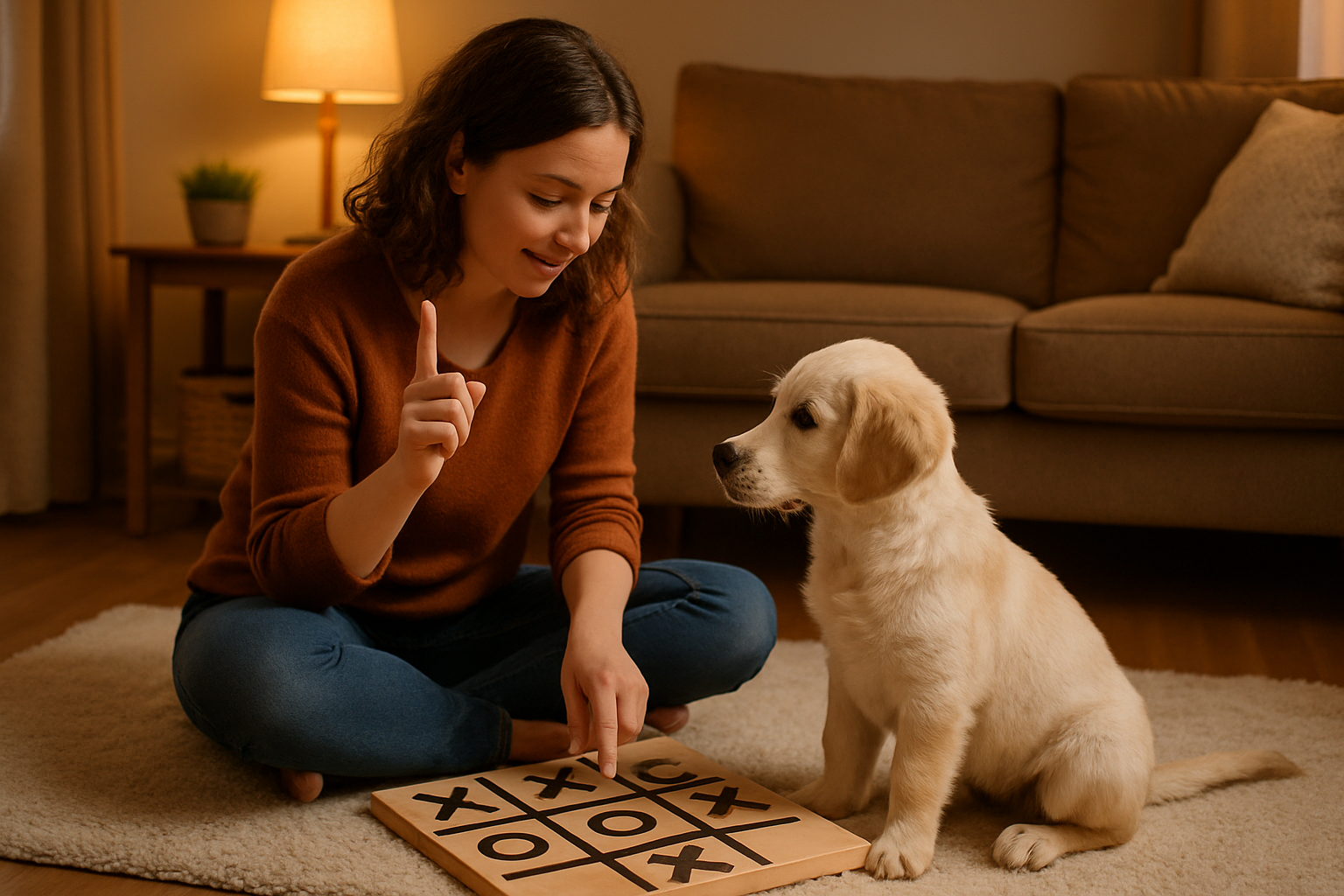
10 Games to Play with Your Puppy Indoors: Training, Fun, and Bonding
There's nothing quite like watching your puppy's eyes light up during playtime. But here's the challenge many puppy parents face: what do you do when the weather turns ugly, your schedule is packed, or you simply need to tire out your energetic furball without leaving the house?
The answer lies in understanding that puppies need more than physical exercise—they need mental stimulation. In fact, a mentally engaged puppy is often a well-behaved puppy. Indoor games serve double duty: they keep your pup entertained while simultaneously building important skills like recall, impulse control, and focus. [1] These activities also strengthen the bond between you and your puppy, creating a foundation of trust and communication that lasts a lifetime.
Whether you're dealing with a rainy week, extreme temperatures, or simply want to add variety to your training routine, these 10 indoor games will transform your home into a training and enrichment playground.
Why Indoor Games Matter for Puppies
Before diving into specific games, let's talk about why indoor play is so crucial. Puppies are naturally curious learners with developing brains that crave stimulation. Without proper mental engagement, puppies can develop destructive behaviors like excessive chewing, barking, or jumping. [5]
Indoor games specifically address this need by:
- Providing mental exercise alongside physical activity
- Reinforcing obedience in a low-pressure, fun environment
- Building problem-solving skills and focus
- Strengthening recall and listening abilities
- Creating positive associations with training
- Reducing anxiety and boredom-related behaviors
The beauty of indoor games? You don't need expensive equipment, a large space, or perfect weather. Just you, your puppy, and a bit of creativity. [4]
Game 1: Name Recognition Recall
What it teaches: Response to their name, focus, and recall basics
This foundational game is simple but incredibly effective. Your puppy's name should trigger an immediate, joyful response—almost like they're responding to their favorite sound in the world. [2]
How to play:
- Start in a quiet room with your puppy's favorite treats
- Say your puppy's name in an excited, happy tone
- The moment they look at you, mark the behavior with "yes!" and reward immediately
- Repeat 5-10 times per session, keeping it short and sweet
- Gradually add distractions (soft music, toys nearby) as they improve
Pro tip: Vary your treat rewards and occasionally throw treats in unpredictable directions (over your shoulder, down the hallway, between your legs) to keep the game fresh and exciting. [2]
Game 2: Indoor Chase and Recall
What it teaches: Recall, focus, and joyful engagement with you
This game taps into your puppy's natural instinct to chase moving objects—but this time, they're chasing you! It's a fantastic way to burn energy while reinforcing that coming to you is the most rewarding thing ever. [2]
How to play:
- Start in a hallway or large room with clear space
- Get your puppy excited by running away from them
- Call their name or use your recall cue as you run
- When they catch you, celebrate enthusiastically and reward with treats or play
- Repeat 3-5 times, keeping sessions short to prevent overexcitement
Level-up variation: Add a "wait" cue before you run, creating distance between you and your puppy before calling them. This increases the difficulty and the satisfaction when they successfully recall. [2]
Game 3: Hide and Seek for Puppies
What it teaches: Searching skills, focus, and problem-solving
Hide and seek engages your puppy's natural foraging instincts while building confidence and independence. This game is particularly valuable because it teaches puppies to use their nose—a skill that becomes useful for more advanced training down the road. [1]
How to play:
- Start with easy hiding spots (partially hidden behind a couch, in plain sight behind a door)
- Show your puppy a favorite toy or treat before you hide
- Go hide in your chosen spot and call your puppy's name
- When they find you, celebrate wildly and reward with treats or play
- Gradually increase difficulty by hiding in less obvious spots
- Eventually, you can have a second person hide while your puppy searches
Important note: Keep early games easy so your puppy experiences success and stays motivated. If they lose interest, you've made it too challenging. [2]
Game 4: The Treat Toss Game
What it teaches: Impulse control, focus, and name recognition
This simple game is perfect for burning off excess puppy energy on days when outdoor play isn't possible. It's also excellent for teaching your puppy to focus on you amidst distractions. [2]
How to play:
- Have your puppy sit or stand facing you
- Say their name enthusiastically
- Toss a treat in an unpredictable direction (side, behind you, between your legs)
- Your puppy's job is to chase and retrieve the treat
- Call their name again and repeat
- Aim for 10-15 tosses per session
Why it works: The unpredictability keeps puppies engaged and prevents them from anticipating the next move. This game is also low-cost and requires zero equipment beyond treats you already have. [2]
Game 5: Hand Targeting
What it teaches: Visual focus, following cues, and foundation for trick training
Hand targeting is one of the most useful games you can teach your puppy. It builds a strong visual recall—your puppy learns that touching your hand with their nose equals rewards. This foundation skill opens doors to countless tricks and training applications. [2]
How to play:
- Hold your hand open in front of your puppy at nose level
- When they touch your hand with their nose, mark with "yes!" and reward
- Repeat 5-10 times per session
- Gradually move your hand to different positions (higher, lower, to the side)
- Add a verbal cue like "touch" once they understand the game
Advanced variation: Once your puppy masters basic hand targeting, try having them target your hand through your legs, around obstacles, or at different heights. The wonkier you look, the better! [2]
Game 6: The Sniff and Search
What it teaches: Scent detection, problem-solving, and mental enrichment
Sniffing games tap into one of your puppy's most powerful senses. A 15-minute sniffing session can be as mentally tiring as a 30-minute walk. [1]
How to play:
- Hide treats or toys under cushions, blankets, or cardboard boxes
- Let your puppy watch you hide the treats initially
- Use an excited cue like "Find it!" to encourage searching
- Praise and reward when they discover each hidden item
- Gradually make hiding spots more challenging
- Eventually, hide treats without showing your puppy the process
Safety tip: Ensure all hiding spots are safe and that your puppy can't damage furniture or ingest anything harmful while searching. [1]
Game 7: Tennis Rally (Two-Person Recall)
What it teaches: Reliable recall with multiple people, responsiveness to different handlers
If you have another person available, this game is a game-changer for building bulletproof recall. Your puppy learns to respond to everyone, not just one person. [2]
How to play:
- You and a friend stand 10-15 feet apart
- One person calls the puppy and rewards with treats when they arrive
- The other person immediately calls the puppy back
- Continue alternating, making recalls unpredictable
- Gradually increase distance between players
Pro tip: Make recalls unpredictable so your puppy never knows who will call next. This keeps them engaged and responsive to all voices. You can also vary rewards between treats and toys to maintain interest. [2]
Game 8: Impulse Control Challenge
What it teaches: Patience, impulse control, and obedience during high-energy play
This game teaches your puppy to listen to commands even when excitement levels are high. It's crucial for preventing jumping, nipping, and other overstimulated behaviors. [1]
How to play:
- Start with a toy or treat in your closed hand
- Show it to your puppy but don't let them grab it
- Give a command like "wait" or "leave it"
- The moment they pull back or look away, open your hand and reward
- Repeat 5-10 times, gradually increasing difficulty
- Progress to placing treats on the ground with "leave it" command
Real-world application: This game directly translates to preventing your puppy from bolting through doors, jumping on guests, or grabbing forbidden items. [1]
Game 9: Obstacle Course Navigation
What it teaches: Problem-solving, confidence, body awareness, and focus
Create a simple indoor obstacle course using household items. This game provides both mental and physical stimulation while building your puppy's confidence and coordination. [4]
How to play:
- Use cushions, blankets, chairs, and tunnels to create simple obstacles
- Guide your puppy through the course using treats and verbal encouragement
- Keep obstacles low and easy initially
- Reward each successful completion
- Gradually increase difficulty by adding more obstacles or adjusting heights
- Time your puppy to see if they improve speed and confidence
Benefits: Obstacle courses build problem-solving skills, boost confidence, and provide excellent mental stimulation in a small space. [4]
Game 10: Trick Training Relay
What it teaches: Obedience, focus, and reinforces learned commands in a fun context
Transform basic obedience training into a game by stringing tricks together and making it playful. This keeps your puppy engaged while reinforcing important commands. [1]
How to play:
- Choose 3-5 tricks your puppy already knows (sit, down, shake, spin)
- Ask for them in sequence, rewarding after each command
- Make it a "game show" by being enthusiastic and celebratory
- Vary the order to keep it unpredictable
- Add new tricks as your puppy learns them
- Time the relay to see if your puppy improves
Why it works: This game reinforces obedience while maintaining the fun factor. Your puppy learns that listening to commands is rewarding and exciting, not just something they have to do. [1]
Essential Tips for Indoor Game Success
Start with short sessions: Puppies have limited attention spans. Keep initial game sessions to 5-10 minutes, gradually extending as your puppy matures and builds focus.
Use high-value rewards: Indoor games should feel special. Use treats your puppy absolutely loves, not their everyday kibble. This creates strong positive associations.
Maintain a safe environment: Clear away hazards, ensure adequate space, and use non-slip surfaces to prevent injuries during active play.
Rotate games regularly: Puppies are smart and can get bored with repetition. Varying your game selection keeps things fresh and maintains engagement. [2]
End on a positive note: Always finish game sessions while your puppy is still engaged and having fun. This leaves them wanting more and builds excitement for future sessions.
Adjust difficulty gradually: Start games at an easy level where your puppy can succeed. Gradually increase difficulty as they master each stage. [4]
Tailoring Games to Your Puppy's Age and Energy Level
Not all puppies are created equal. A high-energy Border Collie puppy will have different needs than a laid-back Bulldog puppy. [5]
For very young puppies (8-12 weeks): Focus on games requiring minimal physical exertion and short attention spans. Name recognition, treat toss, and hand targeting are ideal.
For growing puppies (3-6 months): Introduce more complex games like hide and seek, sniff and search, and basic obstacle courses. Increase session duration slightly.
For adolescent puppies (6+ months): Challenge them with tennis rally, trick training relays, and advanced variations of earlier games. These puppies can handle longer sessions and more complex problem-solving.
For high-energy breeds: Prioritize games combining physical and mental stimulation. Tennis rally, chase and recall, and obstacle courses are excellent choices.
For lower-energy breeds: Focus on mental stimulation games like sniff and search, hand targeting, and trick training that don't require intense physical activity.
The Bigger Picture: Building a Well-Rounded Puppy
Indoor games aren't just about keeping your puppy entertained on rainy days. They're about building a foundation for a well-behaved, confident, mentally sharp adult dog. Regular mental stimulation through games can prevent behavioral issues before they start, reduce anxiety, and create a stronger bond between you and your puppy. [5]
The games you play today directly influence the dog your puppy becomes tomorrow. By investing time in these activities now, you're setting your puppy up for success in all areas of life—from walks in the park to interactions with family and friends.
Key Takeaways
- Mental stimulation is just as important as physical exercise for puppies
- Indoor games build essential skills like recall, impulse control, and focus
- You don't need expensive equipment or large spaces to play these games
- Consistency and variety are key to maintaining your puppy's engagement
- Tailor games to your puppy's age, energy level, and personality
- Always end sessions on a positive note to build enthusiasm for future play
- Indoor games strengthen the bond between you and your puppy
- Regular enrichment activities can prevent boredom-related behavioral problems
Remember, the best game is the one your puppy enjoys most. Pay attention to what excites them, what challenges them appropriately, and what brings out their joy. Your puppy is unique, and part of the fun is discovering which games become their favorites. Now grab some treats, clear some space, and get ready to see your puppy's tail wag with pure delight!
Sources & References
- https://missouladogtrainers.com/blog/5-fun-indoor-training-games-to-keep-your-dog-engaged/
- https://zigzag.dog/en-us/blog/new-puppy/games-and-toys/puppy-training-games-library/
- https://www.dogwise.com/enrichment-games-for-high-energy-dogs-your-step-by-step-guide-to-dog-training-fun/
- https://www.animalhospitalofrichboro.com/the-complete-guide-to-canine-enrichment/