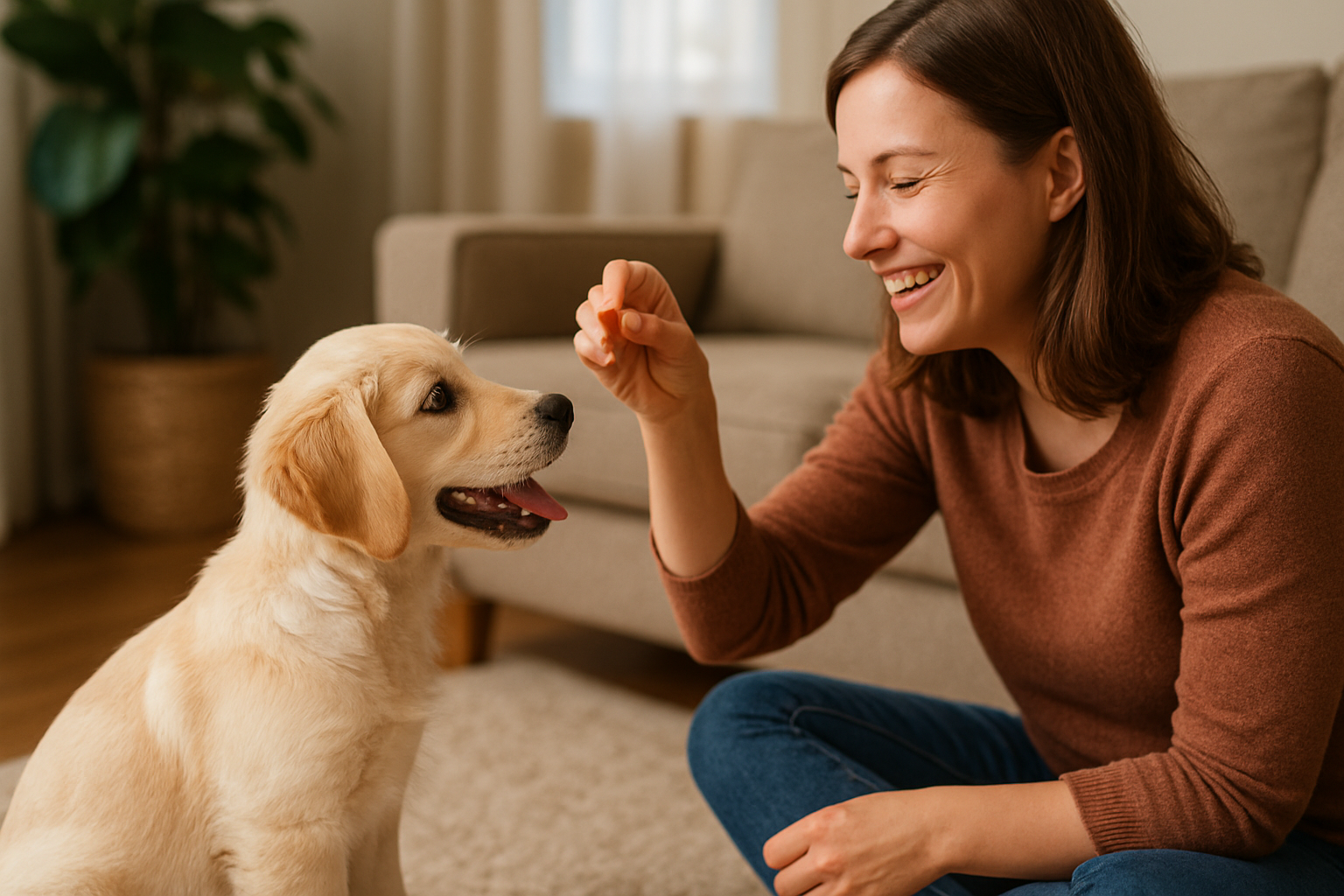
Why Indoor Puppy Games Matter More Than You Think
Puppies are bundles of curiosity and energy, but many new owners underestimate how much mental stimulation their young dogs need. A tired puppy isn't just a calm puppy—it's a puppy that's less likely to develop behavioral problems, experiences lower stress and anxiety levels, and forms a stronger bond with you through play. [3] While outdoor activities are essential for socialization and exercise, indoor games serve a critical purpose: they keep your puppy engaged during bad weather, provide structured learning opportunities, and allow you to channel your puppy's natural instincts in constructive ways.
The key to successful indoor play is understanding that puppies need more than just physical exercise. They crave mental challenges that engage their problem-solving abilities and tap into their natural instincts to hunt, track, and explore. When you combine physical activity with mental stimulation, you create a balanced enrichment experience that transforms your puppy from an Energizer Bunny into a well-adjusted, confident companion. [4]
Game 1: The Name Game – Building Unshakeable Focus
Before diving into complex games, master the foundation: your puppy's name recognition. This game is deceptively simple but incredibly powerful for developing recall and engagement.
How to Play:
- Start in a quiet room with high-value treats your puppy loves
- Say your puppy's name in an excited, happy tone
- The moment your puppy looks toward you (even slightly), immediately reward them with a treat
- Don't wait for perfect attention—reward the reflex of turning their head toward the sound of their name
- Repeat 5-10 times per session, keeping sessions short and fun
- Gradually increase distance by moving to different areas of the room
- Progress to calling from different rooms once your puppy is reliably responding
The Name Game works because it creates a conditioned reflex where your puppy automatically turns toward you when they hear their name. [3] This becomes the foundation for recall training and helps your puppy understand that paying attention to you leads to good things. Start indoors where distractions are minimal, then take the game outside once your puppy masters it.
Game 2: Hide and Seek with Treats – Activating Natural Instincts
This game taps directly into your puppy's hunting and tracking instincts while providing excellent mental enrichment and building confidence.
How to Play:
- Start simple: hide treats in obvious locations around one room while your puppy watches
- Use an excited voice to encourage searching: "Find it! Find it!"
- Let your puppy discover the treats independently
- Gradually increase difficulty by hiding treats in less obvious spots
- Progress to hiding while your puppy is in another room, then releasing them to search
- Use different rooms and hiding spots to keep the game fresh
Hide and seek provides both physical exercise through searching and mental stimulation through problem-solving. [3] It also gives your puppy a healthy, constructive outlet for their natural desire to hunt and track, which helps them become more balanced and well-behaved overall. Plus, the confidence boost from successfully finding rewards strengthens your puppy's self-assurance.
Game 3: Puzzle Toys and Problem-Solving Challenges
Puzzle toys are among the most effective tools for keeping puppies mentally engaged indoors. They require your puppy to think, strategize, and work for their rewards.
How to Play:
- Select age-appropriate puzzle toys designed for puppies (not too difficult initially)
- Show your puppy how the toy works by demonstrating the mechanism
- Help them succeed initially so they understand the reward is achievable
- Let them work independently, resisting the urge to help too quickly
- Rotate puzzle toys to maintain novelty and interest
- Use puzzle toys during mealtimes to slow eating and extend feeding duration
Puzzle toys stimulate problem-solving skills and have been shown to decrease stress and anxiety in puppies. [3] They're particularly valuable for puppies prone to eating too quickly, as they naturally slow the feeding pace and improve digestion. The mental effort required to solve puzzles also tires puppies more effectively than physical activity alone.
Game 4: Tug of War – Building Impulse Control and Strength
Contrary to popular myth, tug of war doesn't create aggressive dogs when played correctly. Instead, it strengthens your bond, builds impulse control, and provides excellent physical exercise.
How to Play:
- Use a rope toy or soft tug toy designed for puppies
- Hold one end and let your puppy grab the other
- Play gently, allowing your puppy to experience winning some tugs
- Establish a "drop it" or "release" command by stopping play and rewarding when they let go
- Reinforce that you control when the game starts and stops
- Keep sessions to 5-10 minutes to prevent overexertion
- Stop immediately if play becomes too rough or your puppy shows signs of aggression
When played correctly, tug of war improves impulse control, strengthens jaw muscles, and provides mental stimulation while tiring your puppy out. [3] The key is establishing clear boundaries and teaching your puppy that releasing the toy on command is rewarded. This game also reinforces your leadership and helps your puppy understand that you're a fun, engaging play partner.
Game 5: Simon Says – Making Training Feel Like Play
Transform obedience training into an exciting game by incorporating commands your puppy is learning into a playful format.
How to Play:
- Use basic commands your puppy knows: sit, down, stay, come
- Give commands in random order with an excited, playful tone
- Reward each successful response enthusiastically with treats or praise
- Occasionally give commands without saying "Simon Says" first (no reward for these)
- Keep the pace upbeat and fun, not rigid or formal
- Mix in new commands with ones your puppy knows well
- End on a positive note with a command your puppy will definitely succeed at
This approach transforms training into entertainment, keeping your puppy engaged and eager to participate. [3] The random nature of the commands keeps your puppy mentally sharp and attentive, while the playful atmosphere builds positive associations with learning.
Game 6: Indoor Obstacle Course – Mini Agility Training
Create a simple agility course using household items to provide physical exercise and mental engagement in a compact space.
How to Play:
- Use cushions, pillows, or low obstacles for jumping over
- Create tunnels using chairs or a play tunnel designed for dogs
- Set up weaving poles using PVC pipes or pool noodles
- Guide your puppy through the course using treats and encouragement
- Keep obstacles low and distances short for young puppies
- Gradually increase difficulty as your puppy grows and gains confidence
- Practice multiple times weekly for best results
An indoor obstacle course provides both physical and mental stimulation while teaching body awareness and coordination. The variety of movements engages different muscle groups and keeps your puppy interested in indoor play. This game also builds confidence as your puppy successfully navigates new challenges.
Game 7: Fetch Indoors – High-Energy Play in Small Spaces
Even in apartments or small homes, you can play fetch by using hallways, long rooms, or creating a safe play zone.
How to Play:
- Use soft toys or balls appropriate for your puppy's size
- Throw the toy a short distance down a hallway or across a room
- Encourage your puppy to chase and retrieve it
- Reward retrieval with praise and treats
- Gradually increase throwing distance as space allows
- Teach "drop it" to end the game safely
- Keep sessions short (10-15 minutes) to prevent exhaustion
Indoor fetch provides the chase and retrieve experience puppies crave while burning significant energy. The key is choosing appropriate toys and spaces that allow safe play without damaging furniture or creating hazards.
Game 8: The Cup Game – Nose Work and Concentration
This simple game builds your puppy's scenting ability and teaches focused concentration on a specific task.
How to Play:
- Use three opaque cups or containers
- Place a treat under one cup while your puppy watches
- Shuffle the cups slowly so your puppy can follow the target cup
- Let your puppy knock over the correct cup to get the treat
- Reward enthusiastically when they find it
- Repeat with the same cup until they understand the game
- Gradually increase shuffling speed and complexity
- Eventually hide treats without letting them watch initially
The Cup Game engages your puppy's sense of smell and provides mental stimulation through concentration and problem-solving. It's an excellent introduction to nose work, which provides enrichment for dogs of any age and ability level. [3]
Game 9: Supervised Playdates – Social Learning Through Play
While technically an activity rather than a single game, playdates provide invaluable learning opportunities for puppies.
How to Play:
- Arrange playdates with well-socialized puppies of similar age and size
- Start with short sessions (15-20 minutes) in a neutral space
- Supervise closely to ensure appropriate play behavior
- Separate puppies if play becomes too rough
- Provide breaks with water and calm time
- Gradually increase playdate duration as puppies become comfortable
- Rotate play partners to expose your puppy to different personalities
Playdates allow puppies to interact with peers, learn appropriate play behavior, and burn off energy together. [3] They also provide crucial socialization experiences that help puppies develop into well-mannered, confident adults. Supervised play teaches valuable lessons about bite inhibition, communication, and reading social cues.
Game 10: DIY Sniff Box – Budget-Friendly Enrichment
Create an inexpensive enrichment toy by making a sniff box from household materials.
How to Play:
- Use a cardboard box, plastic storage container, or paper bag
- Crumple newspaper or paper towels inside
- Hide small treats or kibble throughout the paper
- Let your puppy dig and search for the hidden rewards
- Vary the difficulty by using different materials (blankets, towels)
- Create new sniff boxes regularly for novelty
- Supervise to prevent your puppy from eating paper or plastic
Sniff boxes engage your puppy's natural digging and foraging instincts while providing mental enrichment and entertainment. They're inexpensive to create and can be customized based on what you have available at home.
Pro Tips for Indoor Puppy Game Success
Rotate Games Regularly: Puppies lose interest in repetitive activities. Rotate through different games to maintain novelty and engagement. This prevents boredom and keeps your puppy excited about playtime.
Adjust for Your Puppy's Age: Younger puppies (8-12 weeks) need shorter, gentler play sessions with frequent breaks. As your puppy grows, gradually increase intensity and duration. [3] Always consider your puppy's breed, size, and individual personality when selecting games.
Use High-Value Rewards: Discover what motivates your puppy most—special treats, favorite toys, or enthusiastic praise. Use these rewards strategically to reinforce desired behaviors during games.
Keep Sessions Short and Positive: Puppies have short attention spans. Aim for 10-20 minute play sessions, ending on a positive note before your puppy loses interest. This maintains enthusiasm and prevents frustration.
Combine Physical and Mental Exercise: The most effective indoor play combines physical activity with mental stimulation. This balanced approach tires your puppy more completely than physical exercise alone. [4]
Establish Clear Rules: Use consistent commands and boundaries during games. This teaches impulse control and reinforces that you're a fair, predictable play partner.
Supervise All Play: Always supervise indoor games to ensure safety and intervene if play becomes too rough or your puppy shows signs of stress.
The Bottom Line: Building Your Relationship Through Play
Indoor puppy games are far more than entertainment—they're essential tools for developing a well-adjusted, confident, and well-behaved dog. By combining physical exercise with mental stimulation, you address your puppy's core needs while strengthening your bond. [4] These games teach valuable skills like impulse control, focus, and appropriate behavior while building your puppy's confidence and problem-solving abilities.
Start with the games that match your puppy's personality and energy level, then gradually introduce new ones to keep things fresh and engaging. Remember that the goal isn't perfection—it's creating joyful, interactive experiences that your puppy looks forward to. When your puppy associates you with fun, engaging activities, you're laying the foundation for a lifetime of positive behaviors and a deeply rewarding relationship.
So the next time your puppy has the zoomies or you're stuck inside on a rainy day, pull out one of these games. Your puppy will be happier, calmer, and more connected to you—and you might just find that playtime becomes your favorite part of the day too.