Why Indoor Play Matters More Than You Think
Most dog owners understand that their puppies need exercise, but many underestimate how crucial indoor play truly is. Whether you're snowed in, dealing with scorching heat, or simply navigating life in a small apartment, your puppy's need for stimulation doesn't pause. A puppy without adequate mental and physical engagement becomes a restless, anxious companion—one who may resort to destructive behaviors like chewing furniture, excessive barking, or pacing. [3]
Here's what many pet parents don't realize: mental exercise tires puppies out just as effectively as physical activity. In fact, a short 15-minute training session or puzzle game can leave your pup ready for a nap, even without a long outdoor walk. [3] This is especially valuable during seasons when outdoor time is limited or when life gets hectic.
Beyond preventing boredom, regular indoor play strengthens your puppy's muscles, supports joint health, boosts confidence, and deepens the bond between you both. When you play together, you're not just entertaining your pup—you're building a foundation of trust and communication that will benefit your relationship for years to come. [2]
Before You Begin: Safety First
Before diving into these games, take a moment to puppy-proof your play space. Remove breakable items, secure electrical cords, and clear a clutter-free zone where your pup can move safely. Consider your puppy's age, size, and any existing health conditions. Younger puppies have developing joints, so high-impact activities like stair racing should be approached cautiously. Older puppies may be more prone to injuries, so gentler games work better. [2]
If your puppy has any health concerns or is recovering from injury, consult your veterinarian before starting a new exercise routine. Your vet can recommend low-impact options tailored to your individual pup.
Game 1: Hide and Seek—The Classic That Never Gets Old
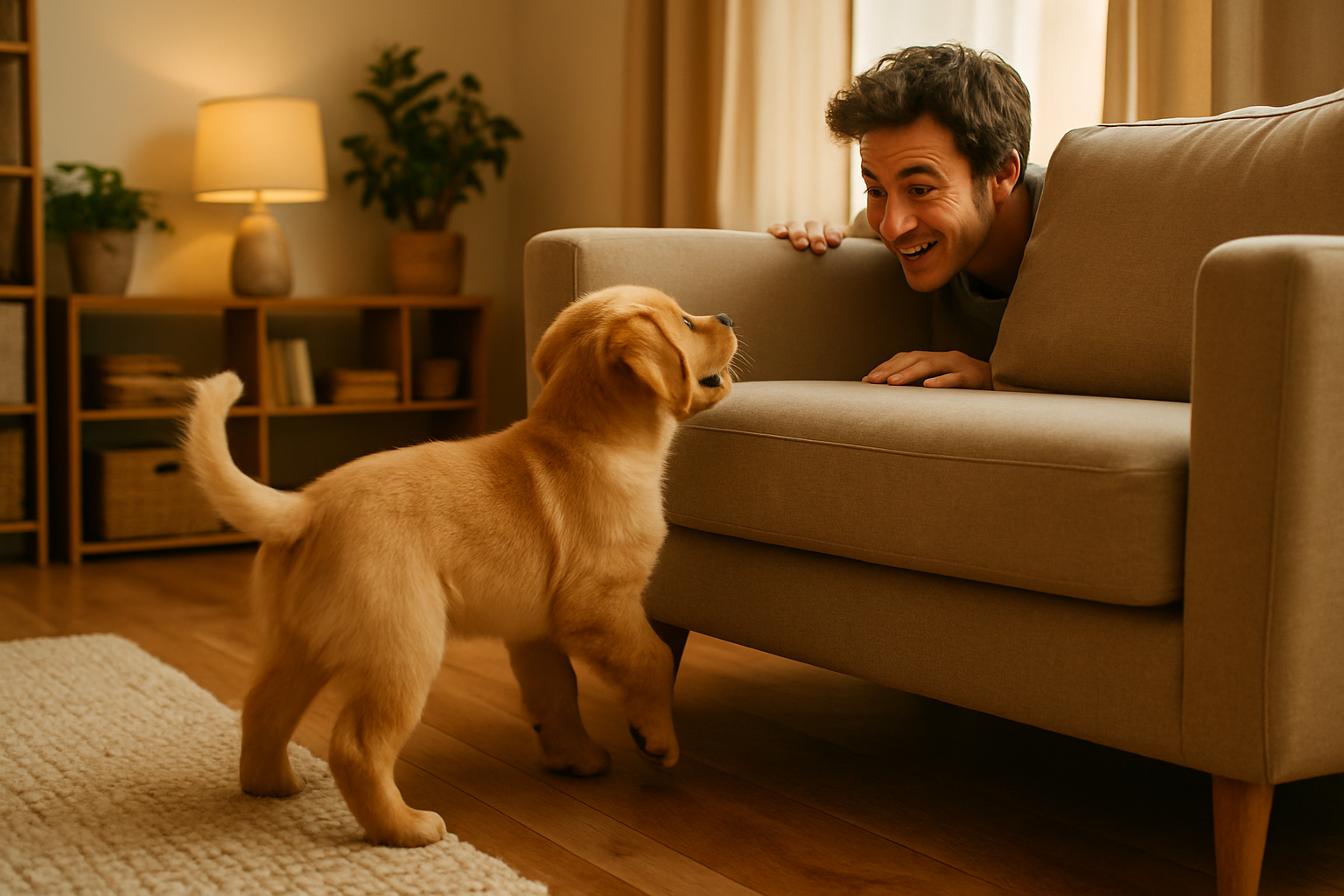
This timeless game combines physical activity with mental engagement, and puppies absolutely love it. Here's how to play:
- Ask your puppy to sit and stay (or have someone hold them)
- Leave the room and hide somewhere in your home—behind a door, in a closet, or under a blanket
- Call your puppy to come find you
- When they locate you, celebrate enthusiastically and reward with treats or praise
As your puppy improves, increase the difficulty by hiding in more challenging spots or playing in different rooms. This game reinforces recall training while providing excellent physical activity and mental stimulation. [2]
Game 2: The Muffin Tin Treasure Hunt
This simple puzzle game taps into your puppy's natural hunting instincts and requires only basic household items. You'll need a muffin tray, tennis balls, and your puppy's favorite treats. [2]
- Place treats in some (or all) of the muffin tin cups
- Cover each cup with a tennis ball
- Let your puppy figure out how to remove the balls and access the treats
- Start easy with just a few covered cups, then increase difficulty as your pup catches on
This game can last as long as your puppy remains engaged, and you can vary it by using different treats or changing which cups are filled. It's perfect for rainy afternoons and requires minimal setup.
Game 3: Indoor Stair Sprints—Perfect for Multi-Level Homes
If you have carpeted stairs, this game is an excellent way to burn energy safely. Stair racing provides intense physical activity in a controlled environment. [2]
- Have your puppy start at the bottom of the stairs
- Say "On your marks, get set, go!" and race to the top together
- Make it a family competition with different heats to determine the champion
- Take breaks between races to prevent overexertion
This high-energy game works especially well for puppies with excess energy. Always use carpeted stairs to prevent slipping, and supervise closely to avoid tumbles.
Game 4: Treat Puzzle Dispensers—Mental Workout in a Toy
Puzzle toys challenge your puppy's problem-solving abilities while rewarding persistence. You can purchase commercial options like Kong toys, or create your own DIY version. [2]
Store-bought options: Kong toys and similar dispensers are designed to withstand enthusiastic play while delivering treats gradually.
DIY version: Drill small holes in a plastic water bottle, fill it with treats, and supervise your puppy as they work to extract the rewards. Always monitor your pup to ensure they don't chew off pieces of plastic or the bottle cap.
These toys provide extended entertainment and mental stimulation, making them perfect for times when you need your puppy occupied while you handle other tasks.
Game 5: Scent Work Games—Channel That Powerful Nose
Dogs experience the world through their noses, and scent work games tap directly into this natural ability. Start with basic hide-and-seek games and progress to more complex versions. [2]
Beginner version:
- Hide a treat somewhere obvious in a room
- Say "Find it!" and let your puppy search
- Praise and reward when they locate the treat
Advanced version:
- Hide treats in multiple locations around your home
- Use different scents (peanut butter, cheese, specific dog treats)
- Hide items in more challenging spots as your puppy's skills improve
Scent work games are mentally demanding and incredibly rewarding for your pup. A 10-minute scent game can provide as much mental stimulation as a 30-minute walk.
Game 6: Fetch Indoors—Adapt the Classic for Your Space
While outdoor fetch is popular, indoor versions work wonderfully in hallways, living rooms, or basements. This timeless game never loses its appeal. [2]
- Use soft, pet-safe toys like tennis balls or rubber balls
- Avoid sticks, which can splinter and cause mouth or stomach injuries
- Throw the toy down a hallway or across a room
- Encourage your puppy to chase and bring it back
- Reward the return with praise or a treat to reinforce the behavior
For apartments or smaller spaces, use a shorter throw distance and softer toys. The repetition that seems boring to you is endless entertainment for your puppy.
Game 7: Training and Skill-Building Games
Don't overlook the power of training as play. Teaching your puppy new commands and skills provides mental stimulation while strengthening your bond. [2]
Basic skills to practice:
- Sit and stay
- Shake or high-five
- Roll over
- Come on command
Advanced skills:
- Play bow
- Spin or twist
- Back up
- Weave through legs
Keep training sessions short (5-10 minutes) and always use positive reinforcement with treats or enthusiastic praise. Only reward successful attempts, and practice multiple times throughout the day. This builds your puppy's confidence and obedience while providing mental exercise that rivals physical activity.
Game 8: DIY Agility Course—Transform Your Home Into a Gym
You don't need expensive equipment to create an agility course. Use furniture you already have to build a challenging obstacle course. [2]
Simple DIY obstacles:
- Weave through chair legs
- Jump over a broomstick balanced between two cushions
- Crawl under a low table
- Walk across a cushion or low balance beam
- Navigate around cones (use bottles or rolled socks)
Agility training helps solve behavior problems, improves your puppy's confidence, strengthens your bond, and teaches self-control. Start with simple obstacles and progress gradually. Always prioritize safety and never force your puppy through uncomfortable movements.
Game 9: The Clean-Up Game—Tidy Home, Happy Pup
This game teaches your puppy to put toys away while providing entertainment and accomplishing household tasks. It's a win-win situation. [2]
- Start with one toy and a designated toy bin
- Hold the toy near your puppy's mouth and say "Pick it up"
- Guide them toward the bin with the toy in their mouth
- When their head is over the bin, say "Drop it" and immediately reward
- Repeat with one toy until they understand the pattern
- Gradually increase to multiple toys
This game requires patience as your puppy learns, but the result is a trained pup who helps keep your home tidy while enjoying the process.
Game 10: Interactive Toy Play—Tug and Engage Together
Playing tug-of-war directly with your puppy strengthens your bond and provides physical activity. Despite old myths, tug doesn't make puppies aggressive when played correctly. [4]
- Use a rope toy or tug toy designed for this purpose
- Initiate the game with an enthusiastic "Let's play!"
- Allow your puppy to win occasionally to keep them motivated
- Establish a "drop it" command to end the game
- Always supervise and use toys in good condition
This interactive play builds confidence, teaches impulse control, and provides excellent physical exercise in a short time frame.
Creating a Sustainable Indoor Play Routine
The key to successful indoor enrichment isn't picking one game and sticking with it—it's variety and consistency. [3] Consider creating a daily schedule that mixes different types of activities:
Sample Daily Schedule:
- Morning: 10-minute scent work game or treat puzzle
- Midday: 5-minute training session with new skills
- Afternoon: 10-minute fetch or tug play
- Evening: Agility course or hide-and-seek game
Rotate games weekly to prevent boredom. Keep a basket of toys and puzzle games accessible so you can grab activities quickly when your puppy shows signs of restlessness. [3]
Recognizing When Your Puppy Needs More Stimulation
Watch for these signs that your puppy isn't getting enough mental or physical activity: [5]
- Destructive chewing or scratching
- Excessive barking or whining
- Pacing or restlessness
- Jumping on people or furniture
- Difficulty focusing during training
If you notice these behaviors, increase the frequency and intensity of indoor games. Often, what appears to be a behavior problem is actually a bored puppy asking for engagement.
Adjusting Games for Your Puppy's Age and Ability
Different life stages require different approaches. [2]
Young puppies (8-16 weeks): Focus on short, simple games like basic hide-and-seek and gentle fetch. Keep sessions brief (5 minutes) and prioritize play that builds confidence.
Growing puppies (4-12 months): Introduce more complex games like agility courses, training challenges, and longer scent work sessions. Their bodies are developing, so avoid high-impact jumping.
Adult puppies (1+ year): Most puppies can handle the full range of games. Increase intensity and complexity based on your individual pup's energy level and interest.
The Bonus Benefits: What You Gain From Playing Together
While your puppy receives obvious benefits from indoor games, you gain something equally valuable. Playing together releases endorphins in both you and your pup—those "feel-good" hormones that reduce stress and improve mood. [3] You'll notice improved focus, better sleep, and a deeper emotional connection with your furry companion.
Indoor play also provides structure to your day, especially during long winters or periods when outdoor activities are limited. This routine benefits both you and your puppy's mental health.
Final Thoughts: Making Indoor Play a Lifestyle
The most important thing to remember is that there's no "perfect" game—only the games that excite your individual puppy. Some pups go crazy for scent work, while others prefer the simplicity of fetch. Pay attention to what engages your puppy most, then build your indoor routine around those preferences.
Consistency matters more than duration. A few short play sessions spread throughout the day provide more benefit than one marathon session. [3] By incorporating these 10 games into your daily routine, you'll have a mentally stimulated, physically active, and emotionally connected puppy who's too happy and tired to get into mischief.
Remember: a tired puppy is a happy puppy, and a happy puppy makes for a happy household. Your living room, hallway, and stairs are all waiting to become your puppy's favorite playground.
Sources & References
- https://www.animalhealthfoundation.org/blog/2020/04/12-games-for-dogs-to-keep-your-pup-entertained-and-healthy/
- https://www.barkandwhiskers.com/2025-12-03-indoor-dog-activities/
- https://www.dogwise.com/enrichment-games-for-high-energy-dogs-your-step-by-step-guide-to-dog-training-fun/
- https://www.animalhospitalofrichboro.com/the-complete-guide-to-canine-enrichment/