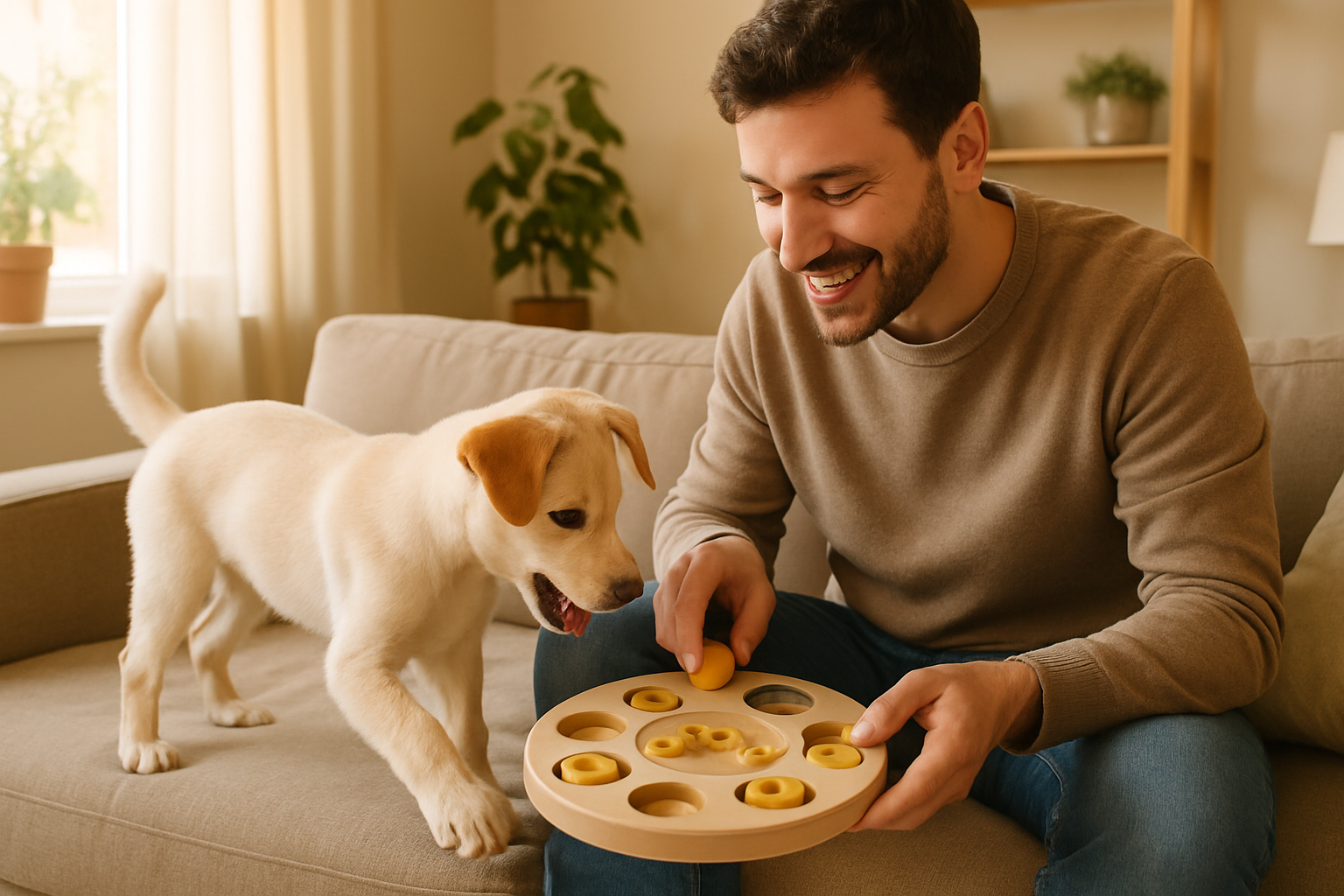
10 Indoor Games to Keep Your Puppy Happy & Entertained
If you're a new puppy parent, you've probably discovered that a bored puppy is a destructive puppy. Chewed shoes, scattered cushions, and endless barking are telltale signs that your little furball needs more mental and physical engagement. The challenge? Bad weather, extreme temperatures, and limited outdoor space don't always cooperate with your training schedule.
The good news: some of the most effective puppy training happens indoors. Interactive games aren't just about burning energy—they're powerful tools for building confidence, strengthening your bond, and teaching critical life skills. [5] Studies show that mental stimulation through enrichment activities can reduce anxiety and prevent behavioral problems before they start.
Let's explore 10 proven indoor games that transform training into playtime while giving your puppy exactly what they need to thrive.
Why Indoor Games Matter for Puppy Development
Before we dive into specific games, it's worth understanding why this matters. Puppies aren't just bundles of energy—they're rapidly developing brains that need consistent mental challenges alongside physical activity. [4] Research shows that dogs require both miles and mental exercise to truly thrive. Without adequate mental stimulation, puppies can develop anxiety, destructive behaviors, and poor impulse control.
Indoor games offer several critical benefits:
- Mental Stimulation: Engaging problem-solving activities that keep their brains sharp
- Bond Building: One-on-one interaction that strengthens your relationship
- Impulse Control: Learning to wait, focus, and respond to commands
- Safe Training: Controlled environments perfect for establishing foundations before outdoor challenges
- Weather-Proof Routine: Consistency regardless of conditions
Game 1: The Name Game – Foundation for Everything
This might seem simple, but the Name Game is the cornerstone of all future training. [3] Your puppy's name should trigger an automatic head-turn toward you—a reflex that eventually becomes the foundation for reliable recall.
How to Play:
- Start in a quiet room with high-value treats (small pieces of chicken, cheese, or special training treats)
- Say your puppy's name once in a cheerful voice
- The instant they look at you, immediately deliver the treat directly to their mouth
- Repeat 5-10 times per session, 2-3 times daily
- Gradually increase distance as they improve, eventually calling from different rooms
Pro Tip: [3] In the early stages, don't wait for your puppy to look at you—deliver rewards quickly to create an automatic reflex. Once they're consistently turning their head, you can build distance and add unpredictability.
Game 2: Chase and Recall – The Joy of Coming Back
One of the most rewarding moments in dog training is watching your puppy race toward you with pure joy. Chase games tap into natural instincts while teaching reliable recall in a safe, controlled environment. [2]
How to Play:
- Start in a hallway or large room with minimal obstacles
- Get your puppy's attention with an excited tone and body language
- Run away from them (yes, really!) and call them enthusiastically
- Reward heavily when they catch you
- Repeat 5-8 times, keeping sessions short and fun
Advanced Version: [2] Add a 'wait' cue so you can create more distance before calling. This builds anticipation and strengthens their response reliability.
Safety Note: Clear the area of obstacles, furniture edges, and other hazards. This game gets exciting fast!
Game 3: Hide and Seek – Building Confidence and Searching Skills
Hide and Seek taps into your puppy's natural searching instincts while building problem-solving abilities. [2] This game works wonderfully on rainy days and teaches your puppy that finding you (or a hidden toy) is the best reward.
How to Play:
- Start with easy hiding spots—partially hidden behind a piece of furniture or a doorway
- Let your puppy see you hide or encourage them to search with excited language
- When they find you, celebrate wildly with treats and praise
- Gradually increase difficulty as they understand the game
- Progress to hiding toys or treats instead of yourself
Pro Tip: [2] Don't make it too difficult too early. If your puppy loses interest, you've made it too challenging. Start simple and build gradually.
Game 4: Hand Target – The Building Block for Tricks
Hand targeting teaches your puppy to touch their nose to your hand on cue. Beyond being adorable, this simple behavior becomes the foundation for countless tricks and provides a visual recall cue. [2]
How to Play:
- Hold your open hand at chest level with a treat inside your palm
- Let your puppy sniff and touch your hand with their nose
- Immediately open your hand and let them eat the treat
- Repeat 10-15 times per session
- Once they understand, say "touch" just before they make contact
- Gradually remove the treat from your hand (keep it hidden nearby)
Make It Weird: [2] Once they master basic hand targeting, try getting them to target through your legs, under a table, or with your hand in unusual positions. Dogs find this hilarious, and it strengthens their focus.
Game 5: Puzzle Toys and Problem-Solving
Puzzle toys aren't just entertainment—they're mental workouts that reduce stress and anxiety. [3] These games activate your puppy's problem-solving brain and provide the kind of cognitive engagement that prevents destructive behaviors.
How to Play:
- Invest in age-appropriate puzzle toys (start with easier ones)
- Show your puppy how treats move around inside the puzzle
- Let them work it out independently while you supervise
- Start with puzzles that take 5-10 minutes to solve
- Progress to more complex puzzles as their skills improve
Mealtime Hack: [3] Use puzzle toys during regular meals to slow down fast eaters and provide daily mental stimulation without extra time investment.
Game 6: Tug of War – Strength and Impulse Control
Despite old myths, tug of war is an excellent game when played correctly. [3] It builds jaw strength, provides physical exercise, and actually improves impulse control and strengthens your bond.
How to Play:
- Use a rope toy or soft tug toy (never use your hands)
- Initiate gentle tugging with your puppy
- Play for 30-60 seconds, then introduce a "drop" or "release" command
- Reward immediately when they let go
- Repeat 3-4 rounds per session
Key Rules: [3] Establish clear boundaries—you initiate and end the game. Teach a reliable release command. This structure prevents aggression and actually builds better behavior.
Game 7: Treat Hunt – Engaging Their Natural Instincts
Scent work and hunting games are deeply satisfying for puppies. They engage natural tracking instincts while providing both mental and physical stimulation. [3]
How to Play:
- Hide small treats around a single room (under cushions, in corners, behind furniture)
- Say an excited "Find it!" and let your puppy search
- Praise enthusiastically when they discover treats
- Start with obvious hiding spots and gradually increase difficulty
- Expand to multiple rooms as they improve
Advanced Version: Hide a favorite toy instead of treats to vary the reward and keep the game interesting.
Game 8: The Name Game Tennis Match – Multi-Person Recall Training
This game is perfect when you have a friend or family member available. It strengthens recall with multiple people and teaches your puppy to respond reliably regardless of who's calling. [2]
How to Play:
- You and a friend stand 6-8 feet apart
- One person calls the puppy's name enthusiastically
- When they arrive, reward with treats and praise
- The other person immediately calls them over
- Repeat back and forth for 5-10 minutes
Pro Tip: [2] Make calls unpredictable—don't alternate in a pattern. This keeps your puppy guessing and prevents them from anticipating who will call next, strengthening their attention to both people.
Game 9: Simon Says Training Sessions
Transform basic obedience training into a game by adding playful elements. [3] This keeps training sessions fresh and prevents your puppy from becoming bored with repetitive commands.
How to Play:
- Choose 3-4 basic commands (sit, down, touch, come)
- Call out commands in random order, like a game
- Reward each successful response with treats or brief play
- Keep sessions to 5-10 minutes maximum
- Celebrate "wins" with extra enthusiasm
Make It Harder: Add distance, distractions, or combine multiple commands in sequence for advanced puppies.
Game 10: Indoor Agility Course – Physical and Mental Challenge
Create a simple obstacle course using household items. This game combines physical exercise, mental challenge, and confidence building—all indoors. [3]
How to Play:
- Use cushions, chairs, and blankets to create obstacles
- Guide your puppy through with treats and encouragement
- Start with very simple layouts (just 2-3 obstacles)
- Reward heavily for attempting and completing each obstacle
- Gradually add complexity as confidence grows
Simple Obstacles: Walk between two cushions, jump over a low stick, crawl under a chair, weave between cones, jump on a low platform.
Designing Your Indoor Game Schedule
Variety is key to keeping your puppy engaged. Rather than playing the same game daily, rotate through different activities to maintain excitement and prevent boredom. [4]
Sample Daily Schedule:
- Morning: Name Game (5 min) + Chase and Recall (5 min)
- Midday: Puzzle toy during meal or training session
- Afternoon: Hide and Seek or Treat Hunt (10 min)
- Evening: Tug of War or Simon Says (5-10 min)
Adjust based on your puppy's age, energy level, and attention span. Younger puppies (8-16 weeks) need shorter, more frequent sessions. Older puppies (4-6 months) can handle longer, more complex games.
Common Mistakes to Avoid
Making Games Too Difficult Too Quickly: [2] If your puppy loses interest, you've likely increased difficulty too fast. Dial it back and build gradually.
Playing When Your Puppy Is Tired: Tired puppies can't focus. Play games when they're alert and ready to engage.
Inconsistent Rewards: Always reward the behavior you want to see again. Consistency is everything in puppy training.
Skipping the Foundation Games: Don't rush to advanced games. The Name Game and basic recall are essential foundations that make everything else easier.
Playing Too Long: Short, frequent sessions beat marathon play sessions. Five minutes of focused attention is better than 30 minutes of scattered play.
Tailoring Games to Your Puppy's Personality
Not all puppies are the same. [5] High-energy breeds like Border Collies and German Shepherds need more intense mental stimulation. Calmer breeds may prefer puzzle toys and scent work over chase games. Observe your puppy's natural preferences and lean into what excites them most.
Some puppies are toy-motivated, others treat-motivated. Some love physical games; others prefer mental challenges. The best game plan combines activities that match your individual puppy's personality and energy level.
The Real Magic: Building Your Bond
Beyond the training benefits, these games create something invaluable: a strong, joyful relationship with your puppy. Every game is an opportunity for your puppy to learn that you're the most interesting, rewarding thing in their world. This foundation makes every future training goal easier and creates a dog who genuinely wants to be with you and listen to you.
The puppy who races toward you with pure joy during chase games, who eagerly solves puzzles knowing you're nearby, who focuses intently on your face during the Name Game—that's not just a well-trained dog. That's your loyal companion, and that bond is worth every rainy day spent playing indoors.
Key Takeaways
- Indoor games provide essential mental and physical stimulation regardless of weather or space constraints
- Start with foundation games like the Name Game before progressing to complex activities
- Rotate games regularly to maintain engagement and prevent boredom
- Keep sessions short (5-15 minutes) but frequent throughout the day
- Always reward the behaviors you want to see again
- Tailor game selection to your puppy's age, energy level, and personality
- Remember that the real goal is building a strong, joyful relationship with your puppy
Sources & References
- https://zigzag.dog/en-us/blog/new-puppy/games-and-toys/puppy-training-games-library/
- https://www.olk9md.com/engaging-activities-for-puppies/
- https://www.dogwise.com/enrichment-games-for-high-energy-dogs-your-step-by-step-guide-to-dog-training-fun/
- https://www.animalhospitalofrichboro.com/the-complete-guide-to-canine-enrichment/