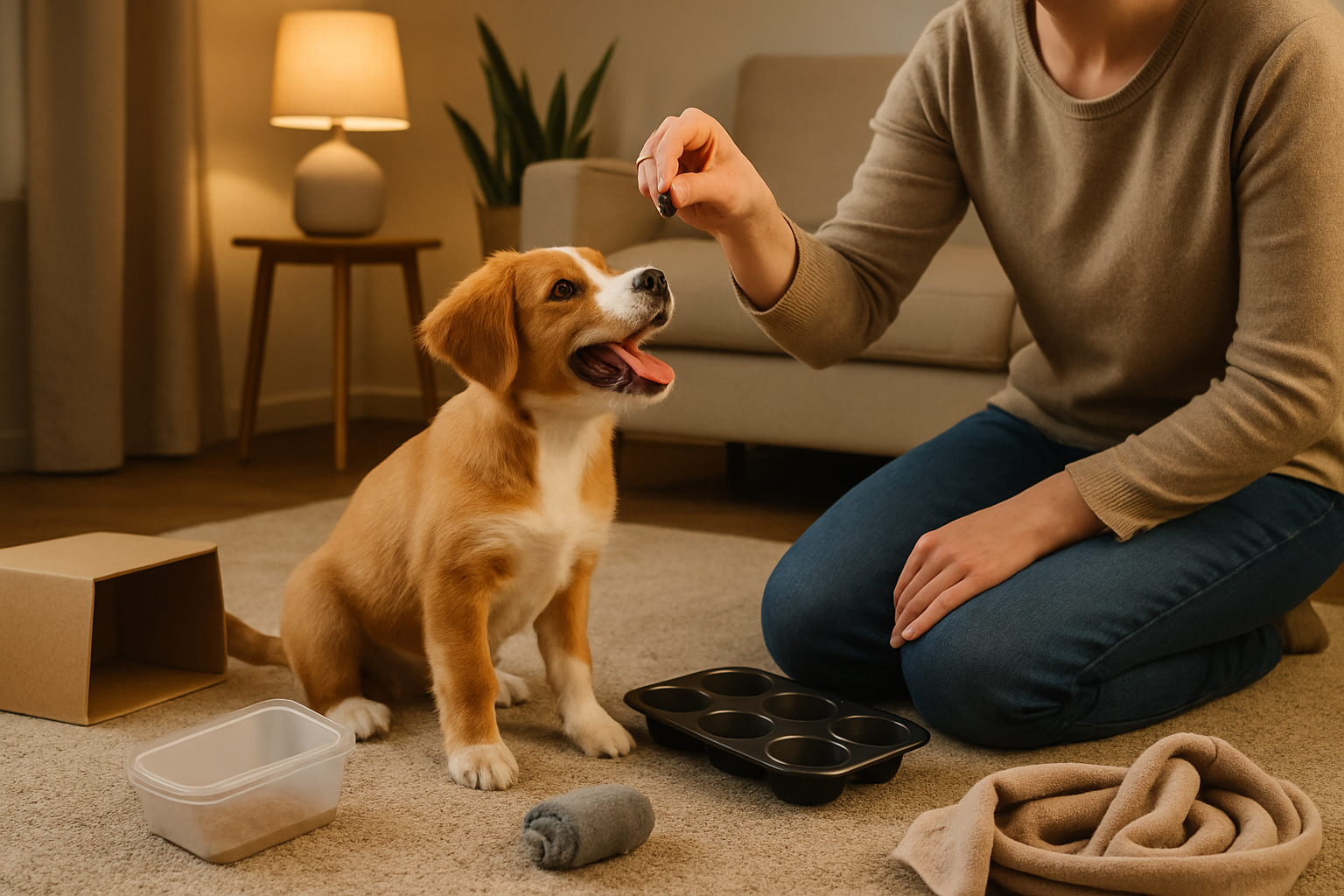
10 Indoor Games to Keep Your Puppy Happy & Engaged
If you're a new puppy parent, you've likely experienced that moment: your little furball has cabin fever, and they're expressing it by turning your socks into confetti. The challenge is real. Puppies need substantial mental and physical exercise—not just outdoor playtime—to develop into well-adjusted, confident dogs. The good news? Your home can become an enrichment playground.
Indoor games do far more than keep your puppy entertained on a rainy Tuesday. They build confidence, strengthen your relationship, develop impulse control, and tire out that endless puppy energy. Most importantly, they engage both the body and the mind, which is exactly what growing puppies need. [3] [4]
Let's explore 10 indoor games that transform your living space into a training and enrichment hub.
1. The Name Game: Building the Foundation for Recall
Before diving into complex games, master this fundamental skill. The Name Game is deceptively simple but incredibly powerful—it's the cornerstone of a reliable recall and creates strong engagement between you and your puppy. [3]
How to Play:
- Start in a quiet room with high-value treats your puppy loves
- Say your puppy's name in an excited, happy tone
- The moment your puppy looks at you, immediately reward them with a treat
- Don't wait for them to come to you—bring the reward to them quickly to create a reflex response
- Gradually increase distance as your puppy consistently turns toward you
- Eventually, practice calling your puppy from different rooms with another family member
Pro Tip: Only use your puppy's name with the recall command and the Name Game. For other obedience commands like "sit" or "down," skip the name. This keeps the name special and maintains its power as a tool for getting immediate attention. [3]
2. Hide and Seek with Treats: Engaging the Hunting Instinct
Puppies are born with natural hunting and tracking instincts. Channeling these instincts constructively creates a more balanced, confident dog while providing excellent mental stimulation. [3]
How to Play:
- Start simple: hide treats in obvious spots around your living room while your puppy watches
- Use an excited cue like "Find it!" and encourage them to search
- Reward enthusiastically when they discover each treat
- As they improve, hide treats in progressively more challenging locations
- Eventually, hide treats while your puppy is in another room
- Vary the difficulty to keep the game engaging
This game taps into your puppy's nose work abilities and provides both physical and mental exercise. It's particularly valuable on days when outdoor exercise isn't possible.
3. Puzzle Toys: Mental Stimulation Meets Problem-Solving
Puzzle toys are more than just entertainment—they're brain-building tools. These interactive toys require puppies to figure out how to access treats or toys, developing problem-solving skills while reducing stress and anxiety. [3]
How to Use Effectively:
- Choose age-appropriate difficulty levels for your puppy's developmental stage
- Start with simpler puzzles and gradually increase complexity
- Use puzzle toys during mealtimes to encourage slower eating (preventing bloat and promoting digestion)
- Rotate different puzzle toys to maintain novelty and engagement
- Supervise initially to ensure your puppy understands the mechanics
- Use them during times when you need your puppy to self-entertain calmly
Puzzle toys are particularly valuable for puppies with high energy levels or those prone to anxiety, as they redirect mental energy constructively.
4. Tug of War: Building Impulse Control and Bond
Contrary to popular myth, tug of war doesn't create aggression when played correctly. Instead, it strengthens your bond, builds jaw muscles, releases energy, and teaches critical impulse control. [3]
How to Play Safely:
- Use a proper tug toy or rope toy designed for this activity
- Initiate the game and control when it starts and stops
- Teach a release command ("Drop it" or "Release") and reward immediately when your puppy complies
- Establish boundaries: no grabbing at hands, only the toy
- End the game on a positive note while your puppy still wants more
- Play for short sessions (2-5 minutes) rather than extended periods
- Never play tug when your puppy is overly excited or aroused
When played with these guidelines, tug of war provides excellent physical exercise, mental engagement, and strengthens the human-canine relationship.
5. Simon Says: Obedience Training as Play
Transform traditional obedience training into an engaging game. By adding playfulness to training, you maintain your puppy's interest and enthusiasm for learning. [3]
How to Play:
- Use basic commands your puppy already knows: "sit," "down," "stay," "come"
- Give commands in a playful tone with animated body language
- Reward heavily for correct responses
- Vary the sequence to keep your puppy guessing
- Mix easy commands with slightly more challenging ones
- Keep sessions short (5-10 minutes) to maintain engagement
- End on a success so your puppy stays motivated
This game strengthens obedience skills while making training feel like playtime rather than work.
6. Indoor Scavenger Hunt: Nose Work at Home
Building on the hide-and-seek concept, a full scavenger hunt engages your puppy's olfactory system and provides comprehensive mental stimulation. This mimics natural tracking and trailing behaviors that puppies are genetically programmed to enjoy. [3]
How to Set Up:
- Hide multiple treats or toys throughout your home before starting
- Create a "start" location where you begin the game
- Use a consistent cue like "Search!" or "Find it!"
- Guide your puppy to the first location if needed
- Let them discover subsequent items independently
- Celebrate each find enthusiastically
- Vary the locations and difficulty to maintain novelty
Scavenger hunts provide valuable enrichment while building your puppy's confidence and independence.
7. The "Place" Game: Teaching Calmness and Boundaries
The "Place" game teaches your puppy to settle on a specific spot (bed, mat, or crate) on command. This builds impulse control and provides mental stimulation through focused, calm behavior. [4]
How to Play:
- Designate a specific spot (dog bed, yoga mat, or designated area)
- Lure your puppy to the spot with a treat
- Use a consistent cue like "Place" or "Bed"
- Reward your puppy for staying on the spot
- Gradually extend the duration they remain on the spot
- Increase distractions over time (sounds, movement, other family members)
- Release with a clear cue like "Free!" or "Release"
This game develops self-control and creates a calm "default" behavior your puppy can default to in various situations.
8. Mini Indoor Agility Course: Physical Challenge and Confidence
You don't need professional equipment to create an agility experience. Transform household items into a fun obstacle course that builds physical skills and confidence. [3]
How to Create:
- Use cushions to jump over or weave through
- Create a tunnel from a hallway or under a table
- Set up poles (PVC pipes or pool noodles) to weave around
- Use low jumps made from broom handles on low supports
- Keep obstacles low and safe for your puppy's age and size
- Guide your puppy through each obstacle with treats or toys
- Keep sessions short and fun—never force participation
Indoor agility builds coordination, confidence, and provides excellent physical exercise in a controlled environment.
9. Fetch and Retrieve Games: Channeling Prey Drive
Fetch is a classic game that provides physical exercise and engages your puppy's natural prey drive. Indoor fetch requires some modifications but remains highly effective. [4]
How to Play Safely Indoors:
- Use a hallway or long room with minimal breakables
- Use soft toys designed for indoor play
- Start with very short distances (5-10 feet)
- Use a "drop it" command to teach release
- Reward the return as enthusiastically as the fetch
- Keep sessions moderate to prevent overexertion
- Ensure adequate space and remove hazards
Indoor fetch provides cardiovascular exercise and reinforces obedience while channeling natural instincts appropriately.
10. Playdate Preparation Games: Building Social Skills
While not all playdates happen indoors, preparing your puppy with indoor games strengthens the social skills they'll need. Practice games like gentle wrestling, turn-taking with toys, and controlled arousal levels. [3]
Solo Preparation Activities:
- Practice sharing toys (give treats for calm toy interaction)
- Play gentle wrestling games with family members
- Practice impulse control games (wait before getting the toy)
- Work on "leave it" commands with treats
- Build confidence through positive indoor interactions
- Teach appropriate greeting behaviors
These foundational games prepare your puppy for positive interactions with other dogs, making supervised playdates more successful.
Maximizing Indoor Game Success: Essential Tips
Keep Sessions Short: Puppies have limited attention spans. Aim for 5-15 minute sessions depending on age, with breaks between games.
Use High-Value Rewards: Identify what motivates your specific puppy—some prefer treats, others toys or praise. Use the most motivating reward for each game.
Rotate Games: Variety prevents boredom and keeps your puppy mentally engaged. Rotate through different games throughout the week.
Match Games to Age: Younger puppies need gentler, shorter activities. Older puppies can handle more complex and extended games.
Prioritize Safety: Always supervise indoor games. Ensure your space is puppy-proofed and free from hazards. [3]
Adjust Based on Individual Preferences: Every puppy is unique. Some love nose work, others prefer physical games. Observe what engages your puppy most and emphasize those activities. [3]
The Bigger Picture: Why Indoor Games Matter
Indoor games aren't just about keeping your puppy entertained on days when outdoor exercise isn't possible. They're essential developmental tools that:
- Build mental resilience and problem-solving abilities
- Strengthen the human-canine bond through shared play
- Develop impulse control and self-regulation
- Provide safe outlets for natural instincts
- Create confidence in various environments
- Reduce stress, anxiety, and destructive behaviors
- Establish patterns for lifelong learning and engagement
A puppy that receives consistent mental and physical stimulation becomes a more balanced, well-behaved adult dog. The investment you make now in engaging indoor games pays dividends throughout your dog's life.
Getting Started: Your Action Plan
Don't try to implement all 10 games simultaneously. Instead:
- Week 1: Master the Name Game and Hide and Seek with Treats
- Week 2: Introduce Puzzle Toys and Tug of War
- Week 3: Add Simon Says and the Place Game
- Week 4: Introduce the remaining games gradually
This gradual approach prevents overwhelm and allows you to refine your technique with each game before adding new ones.
Remember, the goal isn't perfection—it's engagement, fun, and building a strong foundation for your puppy's development. Every game you play together strengthens your bond and contributes to raising a confident, well-adjusted dog.