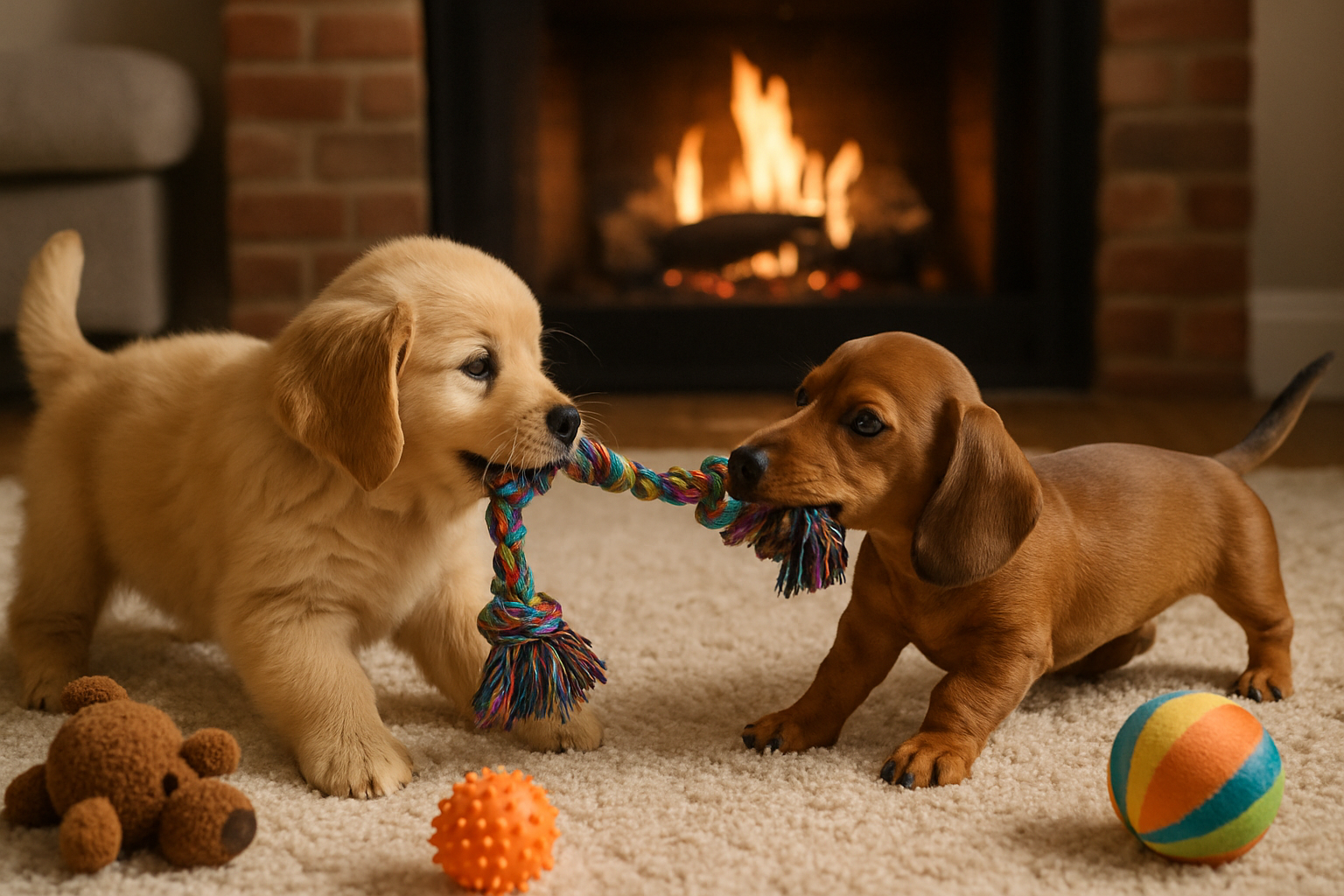
10 Indoor Games to Play with Your Puppy: Keep Them Entertained & Well-Behaved
There's nothing quite like the energy of a new puppy bouncing around your home. But that boundless enthusiasm can quickly turn into destructive behavior when your furry friend doesn't have adequate mental and physical stimulation. Chewed furniture, excessive barking, and constant restlessness are often signs that your puppy's brilliant mind needs more engagement. [5]
The good news? You don't need an elaborate backyard or expensive equipment to keep your puppy entertained and mentally sharp. Indoor games offer the perfect solution, especially during bad weather or when outdoor time isn't possible. These games serve a dual purpose: they exhaust your puppy's energy while strengthening your bond and building essential obedience skills.
Let's explore 10 proven indoor games that will transform your puppy into a calm, confident, and well-mannered companion.
Why Indoor Games Matter for Puppy Development
Before diving into specific games, it's important to understand why mental enrichment is just as critical as physical exercise. Puppies are naturally curious, intelligent creatures that crave both physical activity and mental challenges. Without proper stimulation, they become bored—and bored puppies often develop behavioral problems. [5]
Indoor games offer several key benefits:
- Mental exhaustion: A mentally stimulated puppy is often more tired than one who simply runs around. Problem-solving and learning activate different parts of their brain.
- Obedience building: Games make training feel like play, not work, helping your puppy learn commands naturally and joyfully.
- Bonding: Playing together strengthens your relationship and builds trust between you and your puppy.
- Behavioral improvement: Proper enrichment reduces anxiety, destructive chewing, and excessive barking. [5]
- Confidence building: Successfully completing games and challenges helps puppies develop self-assurance and problem-solving abilities.
Game 1: The Name Game (Foundation for Everything)
This might seem simple, but the Name Game is one of the most important games you'll ever teach your puppy. It builds name recognition, which is the foundation for a reliable recall. [3]
How to play:
- Sit on the floor or at a low level where your puppy feels comfortable.
- Say your puppy's name in an excited, happy tone.
- The moment they look at you (even a quick glance counts), immediately reward them with a high-value treat.
- Repeat this 5-10 times in short sessions throughout the day.
- Gradually increase the difficulty by calling from different rooms or with mild distractions.
Pro tip: In the early stages, don't wait for your puppy to look at you—bring the reward to them quickly. This creates a reflexive response where they automatically turn toward you when they hear their name. [3] Eventually, you can add distance and even have another person call your puppy back and forth between rooms.
Game 2: Hide and Seek with Treats
This game engages your puppy's natural hunting instincts while building their confidence and problem-solving skills. It's perfect for burning mental energy on those days when outdoor play isn't possible. [2]
How to play:
- Start in a small, confined space like one room.
- Show your puppy a treat and let them watch as you hide it in an obvious location (under a cushion, behind a toy).
- Say "Find it!" and encourage them to search.
- Celebrate enthusiastically when they discover the treat.
- Gradually increase the difficulty by hiding treats in less obvious spots as your puppy improves.
Variation: Once your puppy masters treat-finding, hide yourself instead. Let them search the house for you, then reward them with treats and praise when they locate you. [2]
Game 3: The Chase Game (Building Reliable Recall)
Dogs are naturally excited by fast movement, and this game channels that excitement into a fun recall exercise. It teaches your puppy that coming to you is the most rewarding thing they can do. [2]
How to play:
- Start in a hallway or clear room where there's space to move safely.
- Get your puppy excited and engaged.
- Run away from them in an exaggerated, playful manner.
- When they chase you, celebrate wildly and reward them with treats or a favorite toy.
- Repeat several times in short bursts (puppies have limited attention spans).
Advanced variation: Add a "wait" cue before you run. Have your puppy sit and wait while you move further away, then call them to chase you. This builds impulse control alongside recall. [2]
Safety note: Make sure your play area is clear of obstacles, furniture corners, and other hazards. Puppies can get so excited they forget to watch where they're going!
Game 4: Hand Targeting
Hand targeting teaches your puppy to touch your hand with their nose on command. This simple skill becomes incredibly useful for tricks, positioning, and building a strong visual recall. [2]
How to play:
- Hold your open hand in front of your puppy at their nose level.
- Most puppies naturally investigate your hand—the moment their nose touches it, mark the behavior with "Yes!" and reward immediately.
- Repeat 5-10 times per session.
- Once your puppy reliably touches your hand, add the cue "Touch" or "Target" before presenting your hand.
- Gradually move your hand to different positions to increase difficulty.
Why this matters: Hand targeting removes the pressure of traditional recall. Your puppy learns that coming to you doesn't always mean the fun ends or the leash goes on—sometimes it just means a quick nose touch for a treat. [2]
Game 5: The Name Game Tennis
This is a multi-person version of the Name Game that strengthens your puppy's ability to respond to multiple people and builds unpredictable recall. [2]
How to play:
- Recruit a friend or family member to help.
- You and your helper stand a few feet apart.
- One person calls the puppy's name and rewards them with a treat when they arrive.
- The other person then calls the puppy's name and rewards them similarly.
- Continue alternating, gradually increasing the distance between you.
- Make the calls unpredictable so your puppy doesn't anticipate who will call next.
Pro tip: If your puppy is running too fast and jumping on people, ask them to sit at the end of the recall before giving the reward. This teaches control and politeness. [2]
Game 6: Puzzle Toys and Problem-Solving
Puzzle toys provide mental stimulation that can be just as tiring as physical exercise. They're also excellent for slowing down puppies who eat too quickly and helping them develop patience and problem-solving skills. [3]
How to use them:
- Fill a puzzle toy with high-value treats or their regular kibble.
- Show your puppy how to manipulate the toy to release treats (initially).
- Let them work independently while you supervise.
- Use puzzle toys during mealtimes to make eating more engaging and slower-paced.
- Rotate different puzzle toys to maintain novelty and prevent boredom.
Benefits: Beyond entertainment, puzzle toys reduce stress and anxiety in puppies. They provide a constructive outlet for their natural instinct to hunt and forage. [3]
Game 7: Gentle Tug of War
Despite the old myth that tug of war makes dogs aggressive, this game is actually excellent for building impulse control, strengthening the bond between you and your puppy, and providing mental stimulation. [3]
How to play safely:
- Use a rope toy or soft tug toy designed for this game.
- Initiate play by offering the toy and letting your puppy grab it.
- Gently pull while your puppy pulls back, keeping the game light and fun.
- Periodically ask your puppy to "Drop it" and immediately reward them with a treat when they release.
- Resume play after the release to show that dropping the toy doesn't end the fun.
- Keep sessions short (2-3 minutes) to prevent overstimulation.
Key rules: Tug of war is healthy when played correctly. The critical element is teaching your puppy to release on command. This builds impulse control and shows them that you're in charge of when play starts and stops. [3]
Game 8: Scent Work and Nose Games
Dogs experience the world primarily through their sense of smell. Scent work games tap into this natural ability and provide intense mental enrichment. These games are suitable for puppies of all energy levels and can be played in minimal space. [3]
Simple scent work games:
- Treat under cups: Place three cups upside down and hide a treat under one. Let your puppy find it by sniffing.
- Scent discrimination: Hide treats in a box filled with crumpled paper or towels. Let your puppy dig and sniff to find them.
- Scent trails: Create a simple trail of treats leading from one room to another for your puppy to follow.
- Sock search: Hide a treat-filled sock in an easy location and encourage your puppy to find it.
Why it works: Scent work engages your puppy's natural instinct to hunt and track while building confidence. A 15-minute scent work session can tire a puppy as much as a 30-minute walk. [3]
Game 9: Simon Says Training Game
Turn obedience training into a game by incorporating playful elements. This makes learning feel less like work and more like fun quality time together. [3]
How to play:
- Teach your puppy basic commands (sit, down, stay) using positive reinforcement.
- Once they know these commands, create a "Simon Says" game where you call out commands in quick succession.
- Reward each correct response enthusiastically.
- Vary the pace and order to keep your puppy engaged and thinking.
- Make it more challenging by adding distractions or combining commands.
Benefits: This game strengthens obedience, builds focus, and makes training sessions feel like play rather than work. Your puppy learns that paying attention to you is rewarding. [3]
Game 10: Mini Indoor Agility Course
You don't need fancy equipment to create an agility course. Use household items to create a simple obstacle course that builds your puppy's confidence, coordination, and problem-solving skills. [3]
DIY agility ideas:
- Weave poles: Use PVC pipes or pool noodles stuck in a line. Guide your puppy to weave between them.
- Jump bars: Use low broomsticks balanced on small boxes or cones (keep heights very low for puppies).
- Tunnel: Use a children's play tunnel or create one with blankets over chairs.
- Balance beam: Use a low, sturdy board or pool noodle on the ground for your puppy to walk across.
- Pause table: Use a low platform or sturdy ottoman where your puppy must jump up and sit calmly.
Important safety notes: Keep all obstacles low and safe for puppies. Their bones are still developing, so avoid high jumps or intense impact activities. Always supervise and make the course fun, not stressful. Stop if your puppy seems tired or frustrated.
Creating the Perfect Indoor Play Environment
To maximize your puppy's enjoyment and safety during indoor games, consider these environmental factors:
- Clear the space: Remove hazards, breakables, and choking hazards before play sessions.
- Use non-slip surfaces: Puppies can slip on hardwood or tile floors. Use rugs or yoga mats to prevent injuries.
- Adequate lighting: Make sure you can see clearly and your puppy can navigate safely.
- Temperature control: Keep the area cool enough so your puppy doesn't overheat during active play.
- Quiet space: Minimize distractions for training games; use busier environments once skills are solid.
Tips for Success with Indoor Games
To get the most out of these games, keep these expert tips in mind:
- Keep sessions short: Puppies have limited attention spans. 5-15 minute sessions are ideal. Multiple short sessions throughout the day are better than one long session.
- Use high-value rewards: Use treats your puppy absolutely loves during games. Save these special rewards for training and play only.
- Read your puppy's body language: Stop play if your puppy seems tired, frustrated, or overstimulated. Games should always be fun, not stressful.
- Rotate games: Keep things fresh by rotating between different games. This prevents boredom and maintains your puppy's enthusiasm.
- Practice inside first: Master games indoors before taking them outside where distractions are greater. [2]
- Be consistent: Play games at similar times each day so your puppy learns to expect and anticipate playtime.
- Celebrate wins: Your enthusiasm is contagious. When your puppy succeeds, celebrate with genuine excitement and generous rewards.
Adjusting Games by Puppy Age and Energy Level
Different puppies have different needs based on age and breed. Adjust these games accordingly:
- Very young puppies (8-12 weeks): Focus on Name Game, gentle hide and seek, and hand targeting. Keep everything low-key and short.
- Growing puppies (3-6 months): Add more active games like Chase and Tug of War. Introduce simple puzzle toys.
- Adolescent puppies (6-12 months): Increase difficulty across all games. Add agility elements and more complex scent work.
- High-energy breeds: These puppies (Border Collies, Australian Shepherds, etc.) need more mental and physical challenge. Combine multiple games and increase difficulty faster.
- Lower-energy breeds: Focus on puzzle toys, scent work, and gentle games. Avoid overstimulation.
Troubleshooting Common Challenges
My puppy loses interest quickly: You may be making the game too difficult. Start with simpler versions and build up gradually. Also, try using higher-value treats or toys.
My puppy gets too excited and nips: This is normal puppy behavior. Redirect to a toy, take a break, or switch to a calmer game. Never punish; simply redirect the energy.
My puppy won't focus with distractions: This is why practicing inside first is crucial. [2] Don't expect perfection in distracting environments until your puppy has mastered games at home.
My puppy seems bored with games: Rotate different games, increase difficulty, or try new variations. Novelty is key to maintaining engagement.
The Bottom Line: Building a Happy, Well-Adjusted Puppy
Indoor games are far more than just entertainment—they're essential tools for raising a well-behaved, confident, mentally sharp puppy. By incorporating these 10 games into your daily routine, you're providing the mental and physical enrichment your puppy needs to thrive. [5]
The time you invest in playing with your puppy now pays dividends throughout their life. You'll develop a stronger bond, create positive associations with training and learning, and help prevent behavioral problems before they start. Plus, you'll discover that playing with your puppy is one of the greatest joys of pet ownership.
Start with one or two games this week. Master them, have fun with them, and then gradually add more to your routine. Your puppy will thank you with years of happiness, obedience, and unconditional love.
Sources & References
- https://zigzag.dog/en-us/blog/new-puppy/games-and-toys/puppy-training-games-library/
- https://www.olk9md.com/engaging-activities-for-puppies/
- https://www.dogwise.com/enrichment-games-for-high-energy-dogs-your-step-by-step-guide-to-dog-training-fun/
- https://www.animalhospitalofrichboro.com/the-complete-guide-to-canine-enrichment/