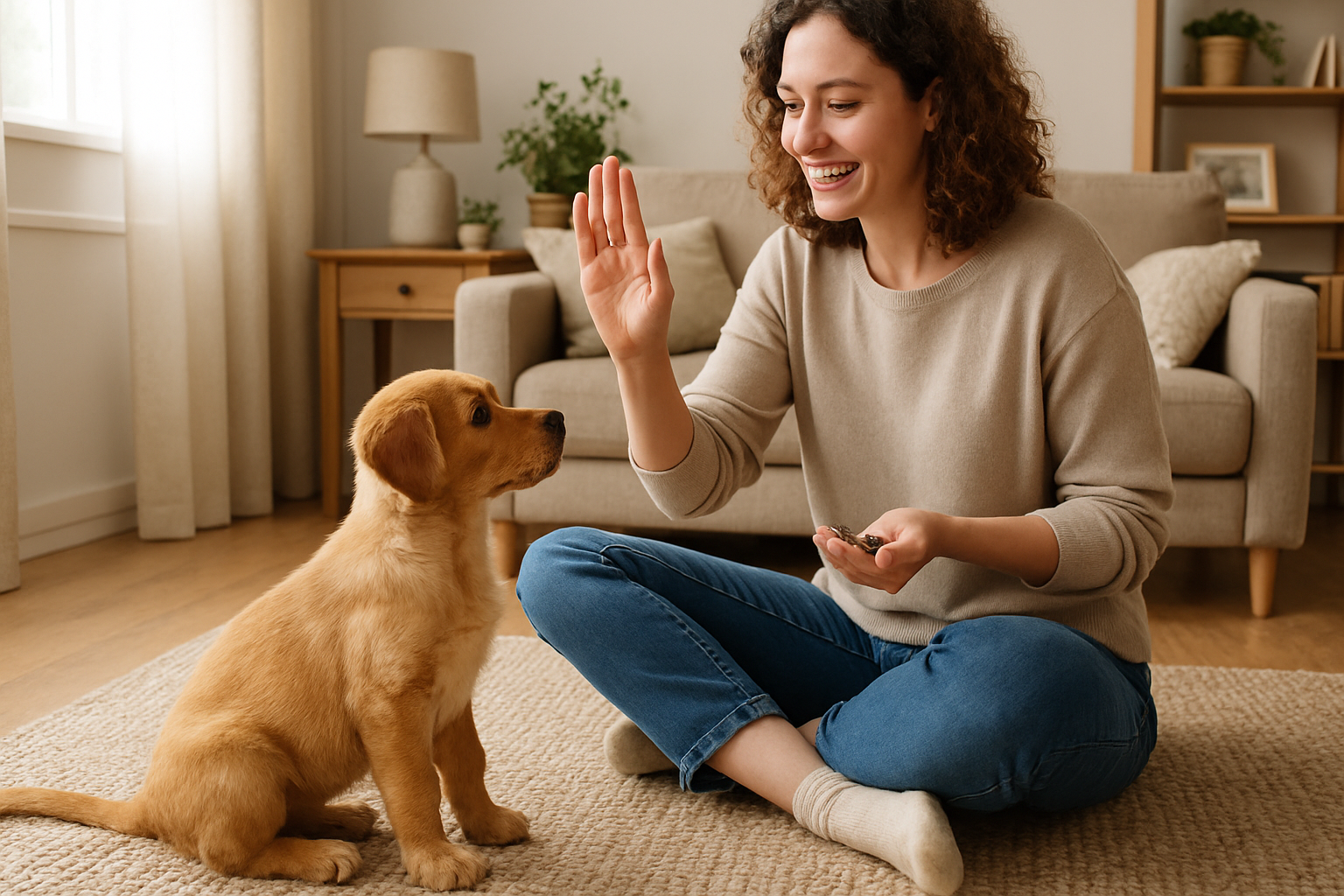
10 Indoor Games to Play with Your Puppy: Mental & Physical Enrichment at Home
Every puppy parent knows the struggle: it's pouring rain outside, temperatures are soaring, or winter winds are howling—and your puppy still has seemingly endless energy. The challenge isn't just keeping them entertained; it's providing the right kind of stimulation that tires both their body and mind. A bored puppy becomes a destructive puppy, and nobody wants to come home to shredded furniture or chewed-up shoes.
The good news? You don't need a sprawling backyard or perfect weather to give your puppy the enrichment they crave. Your living room, hallway, and kitchen can become an adventure playground when you know which games to play. These 10 indoor games are designed specifically to challenge your puppy's mind, build their confidence, strengthen your relationship, and burn off that boundless energy—all without leaving your home. [4]
Why Indoor Games Matter for Puppies
Before we dive into the games themselves, it's worth understanding why indoor play is so valuable. Puppies don't just need physical exercise; they need mental stimulation to develop properly. Games that engage their problem-solving abilities, natural instincts, and recall skills create a more balanced development than physical exercise alone. [5]
Playing games indoors also provides a controlled environment where you can teach your puppy to focus on you without outdoor distractions—making it an ideal training ground for essential commands and behaviors. Plus, these bonding activities strengthen your relationship and create positive associations with learning and play.
Game 1: The Name Recognition Challenge
This might seem simple, but teaching your puppy to respond to their name with enthusiasm is foundational to everything else. When you call their name, you want an immediate, joyful head turn—what trainers call a "switch back." [2]
How to Play:
- Start in a quiet indoor space with minimal distractions
- Call your puppy's name enthusiastically
- The moment they look at you, reward immediately with a treat or praise
- Repeat 5-10 times in short sessions
- Gradually make the game more challenging by tossing treats in unpredictable directions—over your shoulder, down the hallway, or between your legs
Why It Works: This game teaches your puppy that their name predicts something wonderful is coming. It's especially effective on rainy days when outdoor distractions don't exist, allowing your puppy to focus entirely on you. [2]
Game 2: Chase the Joy
Dogs are naturally excited by fast movement, and when that movement is you, it becomes irresistible. This game builds on recall training while tapping into your puppy's prey drive in a controlled way.
How to Play:
- Clear a safe indoor space of obstacles and hazards
- Get your puppy's attention and start running away from them
- Call their name enthusiastically as you move
- When they catch you, celebrate with treats and praise
- Advanced version: Add a "wait" cue so you can get further away before calling them
Pro Tip: Make sure your play area is free of tripping hazards and breakable items. This game works best in hallways or open living rooms where you have a clear path. [2]
Game 3: Hide and Seek
One of the most beloved games for both puppies and their owners, hide and seek engages your puppy's sense of smell, problem-solving abilities, and their desire to find you. It's also an excellent way to reinforce the recall command in a fun, natural way.
How to Play:
- Start with your puppy in a "stay" or ask a family member to hold them gently
- Find a hiding spot nearby—behind a door, under a table, or in a closet (leave it slightly open for safety)
- Call your puppy's name enthusiastically
- When they find you, celebrate with treats, toys, and praise
- Gradually increase difficulty by hiding in spots that are harder to find
Why It Works: This game strengthens your puppy's bond with you while teaching them that finding you is the most rewarding thing they can do. Start indoors where distractions are minimal before attempting this outside. [4]
Game 4: The Indoor Obstacle Course
Create a mini agility course using household items to provide physical exercise and mental challenge. This game builds coordination, confidence, and teaches your puppy to respond to directional cues.
How to Play:
- Use chairs and blankets to create tunnels
- Arrange cushions as low hurdles to jump over
- Set up cones or rolled-up towels for weaving patterns
- Guide your puppy through the course using treats and encouraging words
- Reward them for completing each obstacle
- Keep sessions short (5-10 minutes) to prevent fatigue
Safety First: Make sure obstacles are appropriately sized for your puppy's age and breed. Never force them through—let them explore at their own pace. [4]
Game 5: Treat-Filled Puzzle Toys
While this might not seem like a "game" in the traditional sense, interactive puzzle toys and treat-dispensing toys provide essential mental stimulation and problem-solving opportunities that tire your puppy's brain.
How to Play:
- Fill a Kong toy, puzzle feeder, or interactive toy with your puppy's favorite treats
- For extra challenge, freeze wet food mixed with water inside for a longer-lasting puzzle
- Present it to your puppy and let them work on extracting the treats
- Supervise during play to ensure safety
Why It Works: These toys satisfy your puppy's natural foraging instincts and keep them mentally engaged. A mentally exhausted puppy is often more well-behaved than one who's just had physical exercise. [4]
Game 6: Tennis Ball Rally
This game is a creative twist on traditional fetch that teaches your puppy to respond to multiple people and strengthens their recall in a fun, social setting.
How to Play:
- Recruit a friend or family member
- Stand at opposite ends of a room or hallway
- Call your puppy to you, reward with a treat or toy
- Have your partner call your puppy to them, rewarding similarly
- Continue alternating calls, making the pattern unpredictable
- Gradually increase the distance between you
Pro Tip: Make the recalls unpredictable so your puppy doesn't anticipate when they'll be called next. This keeps them engaged and responsive. If your puppy gets too excited and jumps on people, ask them to sit at the end to slow things down. [2]
Game 7: Hand Targeting
Hand targeting teaches your puppy to touch your hand with their nose on cue. This simple game builds a strong visual recall and creates a foundation for teaching more advanced tricks.
How to Play:
- Hold out your hand at your puppy's nose level
- The moment their nose touches your hand, mark the behavior with "yes" or a clicker
- Immediately reward with a treat
- Repeat 5-10 times in short sessions
- Advanced version: Get them to target your hand through your legs or around obstacles
Why It Works: Hand targeting doesn't have to mean "recall and leash time." For your puppy, it simply means "touch my hand for a treat." This builds positive associations with coming to you. [2]
Game 8: Scent Search and Find
This game engages your puppy's most powerful sense—their nose—and provides excellent mental stimulation while building searching and problem-solving skills.
How to Play:
- Start simple: hide a family member in an easy-to-find location indoors
- Encourage your puppy to "find" them using excited language
- Reward your puppy with treats and praise when they locate the person
- Gradually make hiding spots more challenging
- Advanced version: Hide toys or treats instead of people
Important Note: Don't make the game too difficult too early. Your puppy might lose interest if they can't succeed. Build confidence with easy wins before increasing difficulty. [2]
Game 9: Trick Training Sessions
Short, focused training sessions provide intense mental stimulation and are incredibly effective at tiring puppies. The concentration required for learning new behaviors or reinforcing existing commands engages their brain in ways physical exercise alone cannot. [4]
How to Play:
- Keep sessions to 5-10 minutes maximum
- Focus on one command or trick per session
- Use high-value treats your puppy loves
- Practice basic commands (sit, stay, down, come) or fun tricks (roll over, high-five, play bow)
- Always end on a positive note with a success
Why It Works: Mental exercise is often more tiring than physical exercise for puppies. A 10-minute training session can tire your puppy as much as 30 minutes of play. [5]
Game 10: The Name and Treat Toss
This simple but effective game combines name recognition with physical movement and teaches your puppy to respond instantly to their name with enthusiasm.
How to Play:
- Call your puppy's name with excitement
- The moment they look at you, toss a treat in a fun direction
- Vary your toss directions: straight ahead, over your shoulder, between your legs, or down the hallway
- This keeps the game unpredictable and exciting
- Play for 5-10 minutes in short bursts
Why It Works: The unpredictability keeps your puppy engaged and eager. They never know where the treat will go next, making them more attentive to your calls. [2]
Creating the Perfect Indoor Play Environment
To maximize the success of these games, set yourself up for success:
- Minimize Distractions: Turn off the TV, put away toys, and create a focused play space
- Use High-Value Treats: Reserve special treats for game time to keep your puppy excited and engaged
- Keep Sessions Short: Puppies have limited attention spans. Multiple short sessions are better than one long one
- Safety First: Clear the play area of hazards, breakables, and choking hazards
- Consistency: Play these games regularly to build skills and strengthen your bond
- Read Your Puppy: Stop if they seem tired, frustrated, or disinterested. Games should always be fun
Combining Games for Maximum Benefit
The most effective indoor play sessions combine different types of games. A well-rounded session might include:
- 5 minutes of mental stimulation (puzzle toy or trick training)
- 5 minutes of physical activity (obstacle course or chase)
- 5 minutes of recall-based games (hide and seek or hand targeting)
This balanced approach addresses your puppy's need for both mental and physical exercise while preventing boredom from repetition. [5]
Troubleshooting Common Challenges
My puppy loses interest quickly: Games might be too difficult. Start simpler and build up. Also, rotate between different games to maintain novelty and excitement.
My puppy gets too excited and jumpy: This is normal! Use games like hand targeting and trick training to build impulse control. Always reward calm behavior.
I don't have much space: Most of these games work in apartments and small homes. Focus on games like hide and seek, hand targeting, puzzle toys, and trick training, which don't require much room.
My puppy won't focus indoors: Start with very high-value treats and practice in the quietest room of your home. Build focus gradually before attempting more complex games.
Key Takeaways: Making Indoor Play a Success
Indoor games are far more than just boredom busters—they're essential tools for developing well-adjusted, confident, and obedient puppies. By incorporating these 10 games into your routine, you're providing the mental and physical stimulation your puppy needs while building an unbreakable bond.
Remember that every puppy is unique. Some will gravitate toward games that engage their nose, while others prefer physical challenges or trick training. Experiment with different games to discover what excites your individual puppy most. The fact that you're investing time in play and training is what matters most—your puppy will thrive on the attention and engagement.
Whether it's a rainy afternoon, scorching heat, or simply a day when outdoor play isn't possible, you now have 10 proven games to keep your puppy happy, healthy, and mentally stimulated right in your own home. So clear some space, grab some treats, and get ready for some quality bonding time with your furry friend.